We’re in the midst of a shift: the kind that doesn’t happen overnight, but once it catches on, shapes what every front yard, subdivision, and house plan looks like for decades. Demographic changes are forcing builders to go back to basics: affordability, flexibility, and being ready for every age in the family.
Here’s what’s happening — with real numbers, real consequences, and real homes being built differently today.
Big Picture Shifts
-
The population is aging fast. As of 2024, there are about 61.2 million Americans aged 65 and older, up 3.1% from 2023.
-
That compares to children under 18, who decreased slightly (−0.2%) over the same period.
-
Projections paint a sharper image: by 2050, the 65+ group could grow from ~58 million in 2022 to ~82 million — a 47% increase.
-
And the share of the population that is 65+ is rising: from 12.4% in 2004 to 18.0% in 2024.
So when we say “older buyers,” this isn’t a fringe trend. It’s central.
What’s Changing in Housing & Builder Response
1. Homes Are Shrinking
-
The median size of new single-family homes is shrinking. In 2015, typical new homes hit ~2,466 sq ft; by 2023, that had dropped to ~2,177 sq ft.
-
In 2024, the figure was about 2,150 sq ft for median new single-family homes.
-
Starter homes are getting notably smaller, both because buyers are pushed by cost (price + taxes + insurance + interest rates) and because land and lot‐requirements (setbacks, coverage rules) squeeze what builders can build.
2. More Single‐Level, Townhomes, Multifunctional Layouts
-
Buyers over age 65 are favoring single‐story living. Steps, second floors, big staircases become less attractive when mobility and maintenance are concerns.
-
Townhomes are rising in popularity: in fact, they now make up ~17% of the single‐family housing market, compared with about 10% back in 2009.
-
Flexible interior layouts (extra bedrooms that double as offices, more bathrooms, adaptable spaces) are not just “nice to have” — increasingly these are musts for multigenerational households and homes where older adults may eventually need assistance.
3. Affordability Isn’t Just About Price Tags
-
High mortgage rates (often ~6–7% depending on state / credit) and elevated costs of materials and land mean that buyers — especially younger ones — are stretched even for smaller homes.
-
Older Americans, many on fixed incomes, feel the squeeze from rising insurance, property taxes and upkeep. For some, “downsize,” “rent,” or “move closer to services” are becoming serious options rather than abstractions.
Real Examples & Builders Adapting
I dug up a few concrete cases:
-
Harvard’s Joint Center for Housing Studies reports the shrink to ~2,150 sq ft median for new single-family homes in 2024, down markedly from near 2,500 sq ft in 2013.
-
In the Pacific Northwest, regulatory restrictions on lot coverage & setbacks are forcing smaller footprints. Builders there say that what they’d prefer to build (bigger, more spread out, perhaps multi-story) is being limited by what local jurisdictions allow.
-
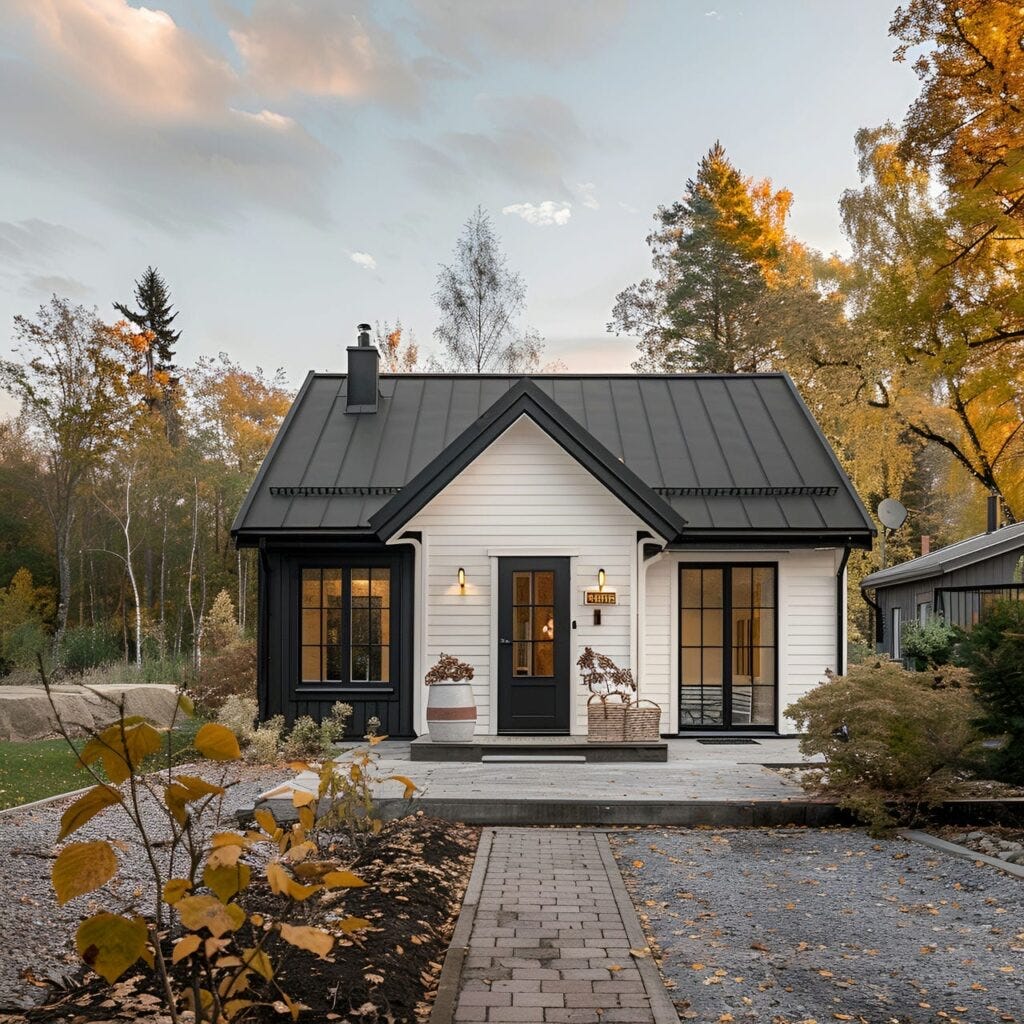
Townhouses and smaller homes are increasingly being priced as the more achievable “starter” option. For example, in multiple markets, there are cottage / compact models (~1,000 sq ft or so) being introduced by larger builders. (“Cottages,” “Garden Homes,” etc.) While not everywhere, these are cropping up more.
What This Means Going Forward: Design, Policy, and Consumer Behavior
This isn’t just about building smaller boxes. It’s a deeper reframing:
-
Aging in place becomes essential. Homes will need features like zero-step entries, wider hallways, room for mobility, bathrooms that work better with limited mobility.
-
Multigenerational flexibility will be baked in. Families want homes where grandparents, adult children, or aging parents can share space but retain independence. Separate suites, dual masters, or extra bathrooms/entrances will be features, not extras.
-
Regulatory reform might be needed. Lot size minimums, setback rules, coverage ratios — these are often obstacles making cheaper (or smaller) housing harder to build. Cities and counties that loosen those could see more affordable homes built.
-
Buyers might have to recalibrate expectations: trading sprawling lawns and multiple car garages for locations near services, walkability, single-story convenience, smaller monthly payments rather than maximal square footage.
Where Data Gaps Remain & What to Watch
-
The income trajectory of Gen Z / younger buyers: student debt + high interest rates = long-term affordability challenge. Will they ever be as square-footage-hungry as past generations? Early sign: many prefer “affordable” and “manageable” over “big.”
-
How much older households will choose renting vs owning. There are signals that more older Americans are renting, especially in places where maintenance, property taxes, climate risk are big concerns.
-
Whether homebuilders will accelerate innovation: tiny homes, pre-fab, modular designs, co-housing, etc. These have potential but regulatory and finance barriers are real.
My Take: Building for Real Life, Not Ideal Life
We need to start thinking of homes not as “how much we can build” but “how people will live.” The dreams of past decades — two-story McMansions, formal dining rooms, huge yards — are giving way to more practical ones. Smaller, yes. But smarter. More adaptive. More human.
Builders who get ahead will win: those who listen (not just to what buyers say they want, but to what their lives demand), who design with longevity, and who can stretch every dollar of land, labor, and regulation into homes people can afford, maintain, and feel proud to live in.