
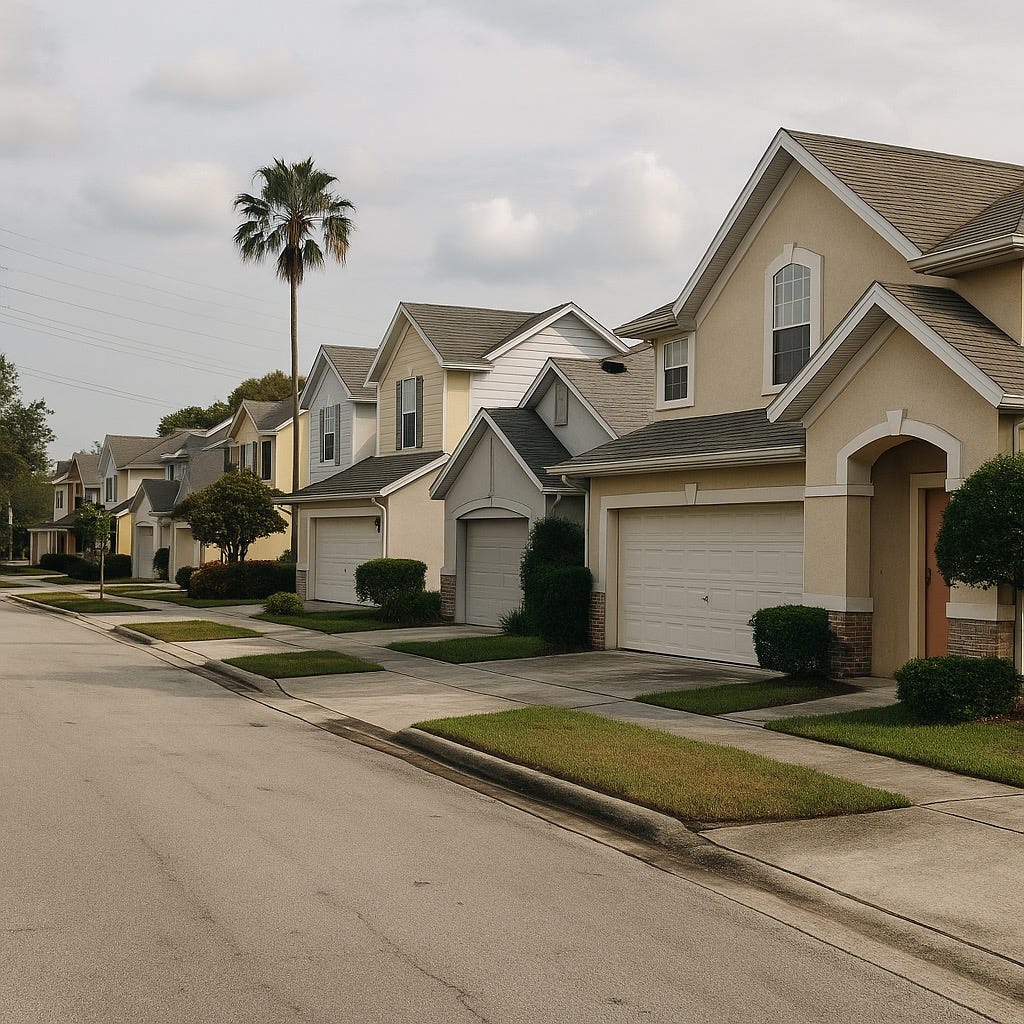
I read a recent WSJ report on Miami’s once-booming suburbs now seeing a surprising exodus of migrants. The piece points to falling home sales, population shifts, and weakening demand in areas that just a few years ago were riding waves of in-migration and speculative real estate expansion.
For Florida real estate watchers and investors, this trend warrants serious attention — it’s more than a local hiccup. It could be a canary in the coal mine, especially for smaller markets that leaned hard on population growth narratives.
🏘 The Flip Side of the Growth Story
What the WSJ article outlines is this: housing markets in Miami’s suburban rings are cooling. Buyers aren’t flooding in the way they used to. Some households are even leaving — reversing a pattern of continuous inflows that fueled homebuilders, lot bankers, and speculators during the post-pandemic boom.
A few key takeaways:
-
Home sales are softening — not collapsing, yet not maintaining prior momentum.
-
Price pressure is creeping in — appreciation is stalling or flattening in zones that had been aggressive bets.
-
Demand from out-of-state buyers is tapering — perhaps as macro economic pressures and shifting migration patterns weigh more heavily.
These shifts are subtle, but meaningful. It’s not just a pause; it’s a realignment.
📍 Why Florida Is Especially Vulnerable
Florida’s real estate ecosystem leaned heavily into the migration thesis. During the boom years:
-
Every new zip code with a “development opportunity” was marketed as “the next hot growth corridor.”
-
Land plays, suburban expansion, and aggressive entitlement strategies were underwritten on forecasts of perpetual inward migration.
-
Multifamily developers, especially in secondary and tertiary markets, often bet on capturing middle-income in-migrants.
So when leading lights (like Miami) show signs of softening, it says something: the core engine may be decelerating.
Here’s how this could manifest negatively across Florida:
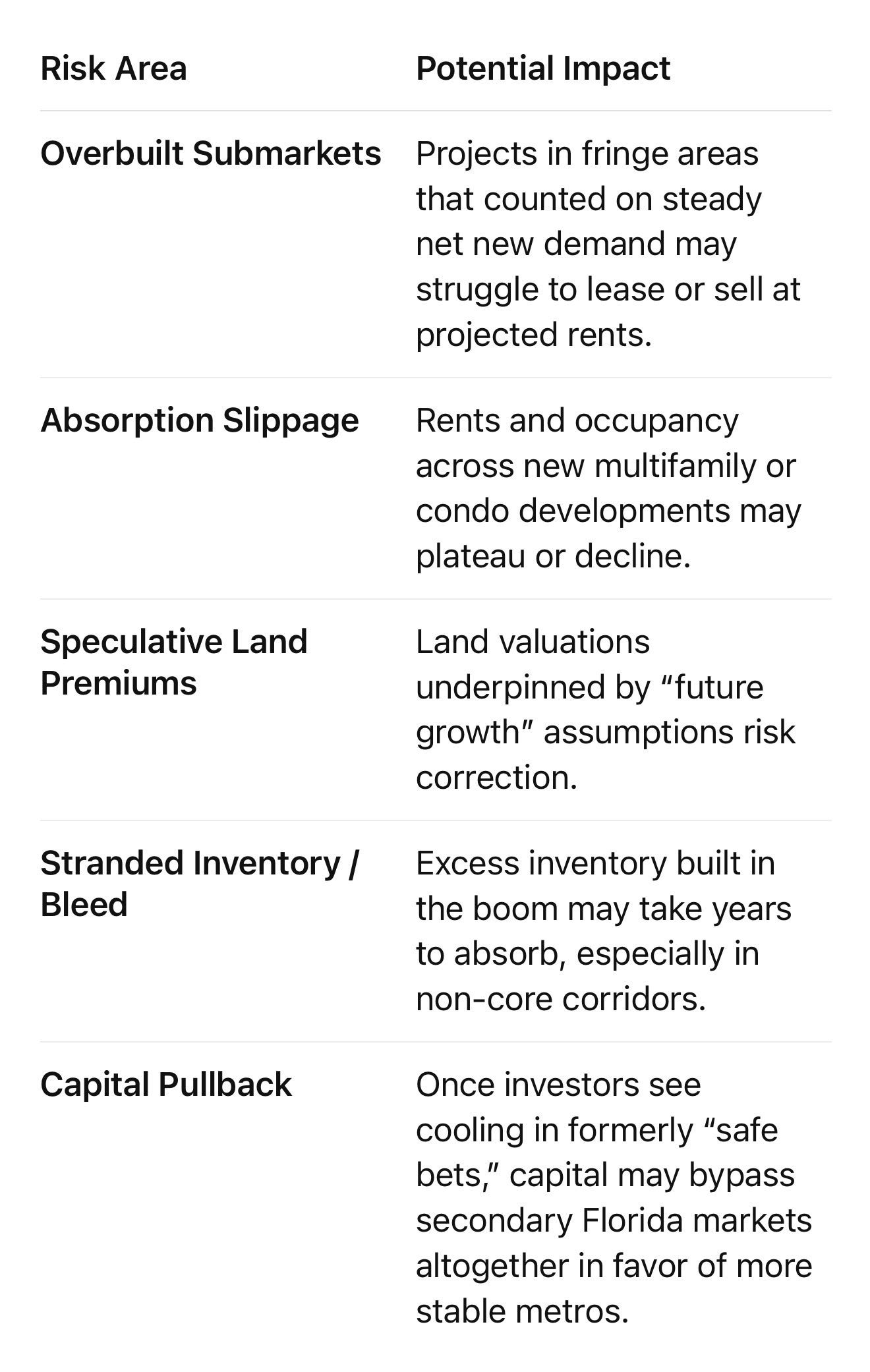
⚠️ The Negative Effects Are Already Showing
In Florida we’re beginning to see early warning signs that align with the trend out of Miami:
• Tighter underwriting — lenders are asking tougher questions on rent growth and absorption assumptions.
• Longer lease-up windows — new projects are taking longer to stabilize.
• Discounting / concessions — early deals are offering more concessions to tenants to hit occupancy thresholds.
• Investor rotations — capital is becoming more selective, favoring coastal core submarkets over deep suburban plays.
If unchecked, this cooling could cascade. Developers might delay or cancel projects; sellers will reckon with reduced pricing; and communities that expanded reliant on population growth may face overcapacity and diminished tax bases.
🧭 What to Watch / What to Do
1. Gauge net migration trends locally
Not all Florida markets behave the same. Monitor county-level population data, IRS migration flows, and address changes to see where the real movement is.
2. Stress test your assumptions
If your pro forma assumes 5–7% annual rent growth forever, run downside scenarios with flat or modest growth. Be especially cautious with “rollout markets” in further out suburbs.
3. Favor core corridors over fringe expansion
Projects closer to job centers, transit, and amenities stand a better chance of holding value if migration softens.
4. Preserve flexibility
Phase development, retain optionality in land deals, and avoid overcommitting capital before absorption is proven.
5. Watch for spillover opportunities
As stronger submarkets soften, there might be capital looking for value in undervalued but stable assets — reposition plays, infill, or niches less exposed to migration volatility.
🔍 Final Thought
What’s happening in the Miami suburbs is a reversal in migration momentum — a tacit reminder that growth isn’t guaranteed. Florida real estate recently rode a rocket propelled by inbound demand, but rockets stall without continuous thrust.
We’re entering a phase where fundamentals — job growth, affordability, supply discipline — will matter again. The era of “land price escalation on migration forecasts alone” may be waning. For those paying attention, this shift is not a crisis but a pivot point that demands smarter risk calibration, deeper local insight, and a renewed rigor in underwriting.
Let me know if you want to dig deeper on migration data by Florida county or run scenario models on your projects — I’m already digging.
— Daniel