
The New Tariff Landscape
Recent policy moves have sent shockwaves through the building and real estate world:
-
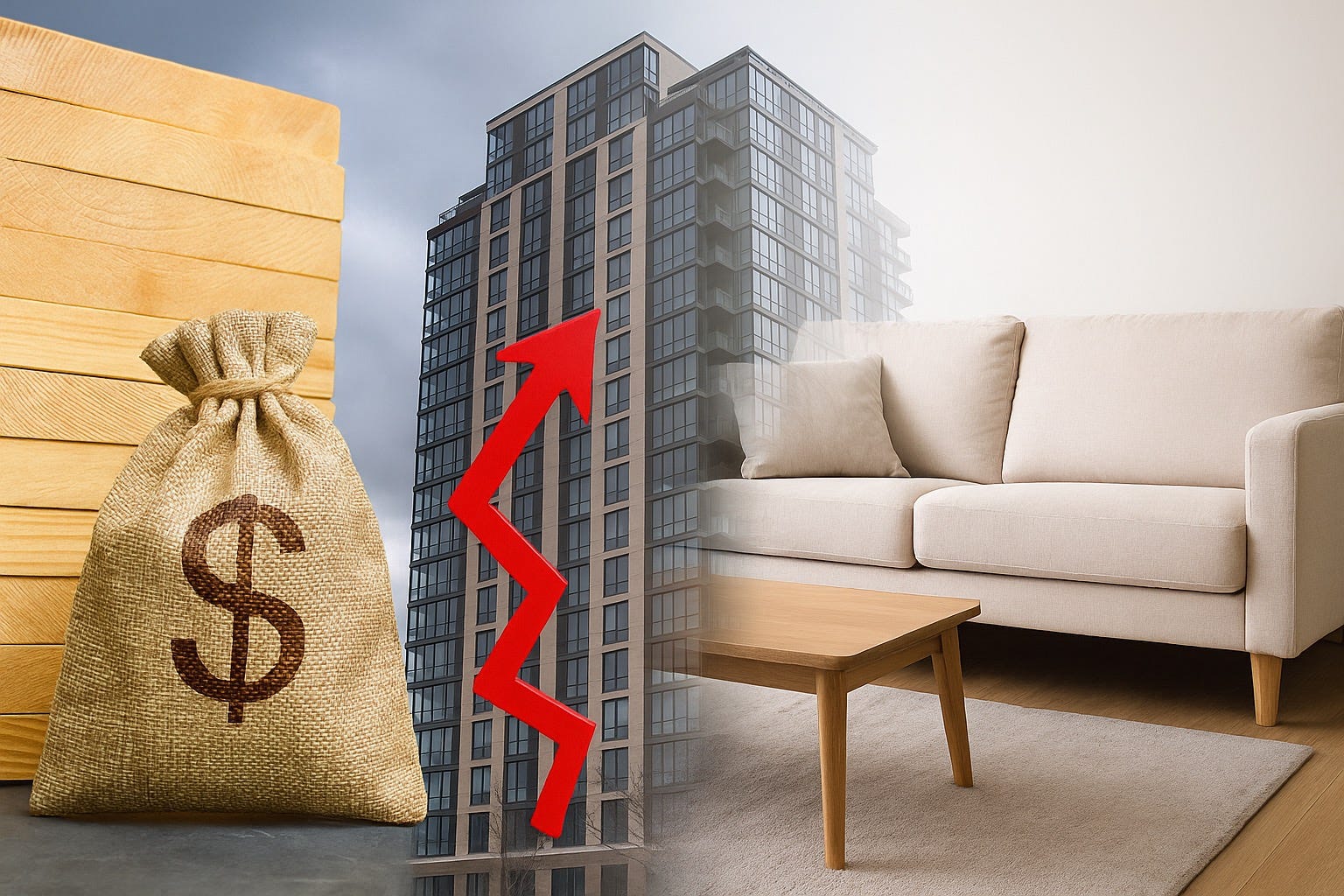
The U.S. government has imposed a 10% tariff on lumber imports and 25% tariffs on kitchen cabinets, bathroom vanities, and upholstered furniture, citing “national security” under Section 232 authority.
-
Those tariffs are scheduled to escalate in 2026: up to 50% on certain furniture items and vanities for non-cooperative countries.
-
Industry insiders warn these measures will raise costs across remodeling, homebuilding, and outfitting developments.
These changes may sound like macroeconomic wrangling, but their immediate impacts are very real — especially if you build, invest, or lease in real estate.
Why Developers and Investors Take the First Hit
Material Costs Surge
Tariffs effectively act as taxes on imported goods. When you import lumber, finished wood products, cabinetry, or furniture, those additional costs either have to be absorbed or passed along. According to the National Association of Home Builders, tariffs on building materials raise costs for homebuilders — and those costs typically get “passed on to end users.”
Some estimates suggest these tariffs could tack $7,500 to $10,000 onto the cost of a single‐family home. Meanwhile, commentary from trade analysts warns the tariffs may add $1,000 or more to home construction costs in affected markets.
For developers working with tight margins, rising input costs squeeze returns — especially on speculative builds or mid-tier projects.
Margin Compression & Budget Risk
When material costs jump late in a project’s timeline, many developers are locked into construction financing, contracts, and pre-sell or lease terms. They may not be able to simply renegotiate. That means squeezed margins, cost overruns, or even aborted projects.
Investors backing those developers may see returns diminished, or some deals that once looked viable turn into money-losing propositions.
Design, Finish, and Product Constraints
Tariffs on furniture, cabinetry, and finish materials limit sourcing flexibility. Developers may be forced to offer lower-quality interiors, scale back amenities, or accept longer lead times as supply chains adjust. These choices can affect how attractive a property is to prospective tenants or buyers.
In short: the product mix gets constrained, costs go up, and risk rises.
The Real Burden Falls on Consumers & Renters
Developers and investors may absorb some of the pain temporarily, but they rarely absorb it entirely. The ultimate cost often trickles down:
-
Higher rents & housing costs. As developers seek to maintain returns, they raise rents or sale prices. For renters and homebuyers already squeezed by inflation, that’s one more upward pressure.
-
Costlier furniture and finishes. Even after occupying a space, consumers furnishing apartments, homes, or offices will face higher prices on cabinets, couches, vanities, and wood furnishings.
-
Reduced housing affordability. For lower- and middle-income buyers, the extra costs are more than just inconvenience — they can push certain homes out of reach.
In effect, the tariffs act as an invisible tax layered on top of every level of real estate consumption.
Who Suffers Most?
Because of this dynamic, several groups are especially vulnerable:
-
Middle and lower-income renters and buyers. These households have less buffer to absorb rent increases or higher housing prices.
-
Smaller developers. Big players may have more flexibility or negotiating power; small developers get squeezed more heavily.
-
Regions dependent on imported building materials. In markets where local supply is limited, the tariff impact will be greater.
-
Tenants of mid-range or non-luxury properties. High-end buildings may be better able to absorb or justify cost increases; middle-tier properties may struggle to maintain margins or appeal.
What to Watch Going Forward
-
Policy changes or relief efforts. Will Congress or the administration roll back or soften these tariffs under pressure from homebuilders, real estate lobbies, or consumer groups?
-
Supply chain realignment. Domestic producers may respond, but scale and capacity can’t shift overnight.
-
Project delays and cancellations. Some marginal developments may be indefinitely postponed or scrapped.
-
Tenant pushback or vacancy increases. If rents rise too fast, tenants may balk, which can feed into higher vacancy and weaker cash flows.
-
Increased focus on value engineering. Developers may look harder at alternative materials, modular building, or less import-exposed supply chains.
Bottom Line
While tariffs are often debated in macroeconomic or trade policy contexts, their knock-on effects are deeply felt in real estate. Developers and investors will be squeezed first — but in the end, consumers, renters, and buyers pay the cost in higher rents, pricier homes, and more expensive furnishings.
If you’re operating in real estate development or investing, now is the time to run scenario models, stress your cost assumptions, rethink sourcing strategies, and monitor policy changes. Because in this environment, what looks like a few percentage points of tariff may translate into a very real shift in profitability — and affordability.