
For most of the past decade, US multifamily demand could be explained by one simple assumption: population growth would take care of it.
That assumption is now breaking down.
The US population grew by roughly 0.5 percent last year, one of the slowest growth rates in modern history. In absolute terms, that translated to about 1.8 million additional residents, roughly half the growth recorded the year prior. For a sector that has underwritten years of aggressive construction on the back of household formation and inbound migration, that slowdown matters.
This is not a cyclical blip. It is a structural shift that is starting to show up in rent trends, absorption, and investor sentiment.
Immigration Was Doing More of the Work Than Many Realized
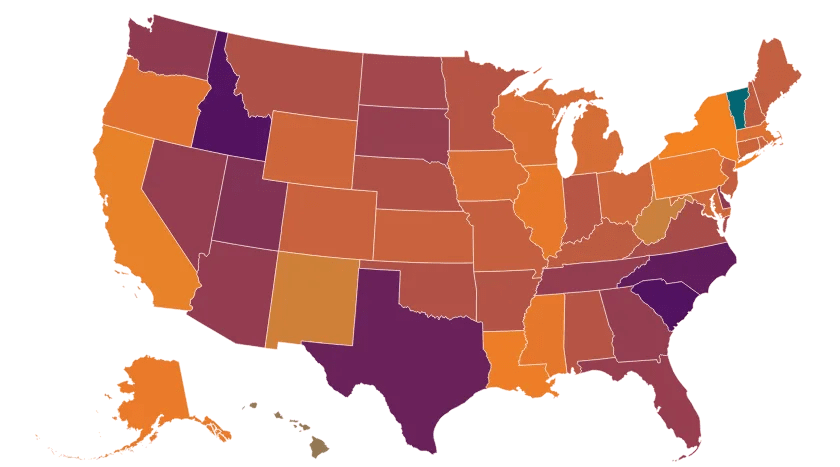
Over the last five years, immigration accounted for at least 80 percent of net population growth in roughly 20 states. In many markets, especially those with low fertility rates or aging demographics, international migration was not just supportive of demand, it was essential to it.
That growth engine is now under pressure.
A sharp decline in international arrivals, combined with elevated deportations and tighter scrutiny around housing eligibility, is creating uncertainty in markets that had come to rely on immigration as a stabilizing force. For multifamily owners and developers, this complicates demand forecasting in ways that are difficult to offset quickly.
When population growth slows this much, supply matters more. And right now, supply is still working its way through the system.
Supply Is Peaking as Demand Softens
Nationally, more than 500,000 new apartment units were delivered in early 2025. While inventory growth has finally begun to decelerate, for the first time in more than 15 years, the effects of that construction wave are still being absorbed.
Rent growth has cooled accordingly. The average one-bedroom rent nationally is hovering around $1,625, up just 0.4 percent year over year. That is a far cry from the pandemic-era surge and closer to long-term norms, if not below them in real terms.
Some of the most aggressive construction markets are now feeling the adjustment most clearly. Rent declines in places like Miami, Phoenix, and Austin are not a surprise when viewed through the lens of supply timing and demand normalization. Phoenix rents are running materially below historical trend, and Miami saw asking rents fall meaningfully in 2025 after years of outsized growth.
This is not a collapse, but it is a reset.
The National Story Is Fragmenting
One of the biggest mistakes right now is treating multifamily as a single national trade.
Yes, Sun Belt markets continue to post population gains, but at a slower pace and with more dispersion beneath the surface. Florida’s relative position has softened as remote-work-driven relocation fades and corporate moves slow. Meanwhile, markets that were already supply-heavy are seeing the consequences show up faster.
At the same time, immigration-dependent states with limited organic population growth face a different risk profile altogether. If immigration remains constrained, demand does not just slow, it becomes harder to replace.
Developer sentiment is shifting accordingly. Underwriting assumptions are becoming more conservative, lease-up timelines are extending, and capital is becoming more selective about where it is willing to absorb near-term volatility.
Large Cities Are a Different Equation
Not all markets will feel this shift at the same speed.
Large urban centers with chronic housing shortages, places like New York and Chicago, continue to operate under fundamentally different dynamics. Rents in these cities remain above historical norms, and overcrowding and pent-up demand provide a buffer that many faster-growing but more supply-sensitive markets lack.
That does not mean they are immune, but it does suggest that slower national growth will play out more gradually there. In undersupplied cities, demand does not need to grow quickly to remain supportive, it simply needs to exist.
What This Means Going Forward
The multifamily sector is not entering a crisis, but it is entering a more constrained environment.
Population growth can no longer be assumed. Immigration is no longer a guaranteed backstop. Supply is still working through the system. All of that puts pressure on underwriting models that were built for a different regime.
The next phase of multifamily performance will be less about broad national trends and more about market-specific fundamentals, supply discipline, and realistic demand assumptions.
For investors and developers, the question is no longer whether multifamily works in general, but where it still works, and why.
That distinction is going to matter a lot more from here.