
I’ll say it plainly: I’m bullish on Chicago. Have been for a while, and I’m getting more bullish, not less.
Yes, I’ve heard the naysayers. The crime headlines, the population loss talking points, the fiscal doom narrative that’s been on loop in the national business press for the better part of a decade. I’ve read the think pieces. I’m not dismissing the challenges. But I’m also not letting yesterday’s narrative blind me to what’s actually happening on the ground — and what’s happening on the ground in Chicago right now is compelling enough that Kaufman & Company is launching a number of new developments and investments into the Chicago market in 2026.
We put our capital where our conviction is. And our conviction is in Chicago.
Which brings me to Tuesday’s groundbreaking at The 78 — because if you needed one more data point to understand why serious real estate money is moving toward this city, this is a pretty good one.
What Just Happened, and Where
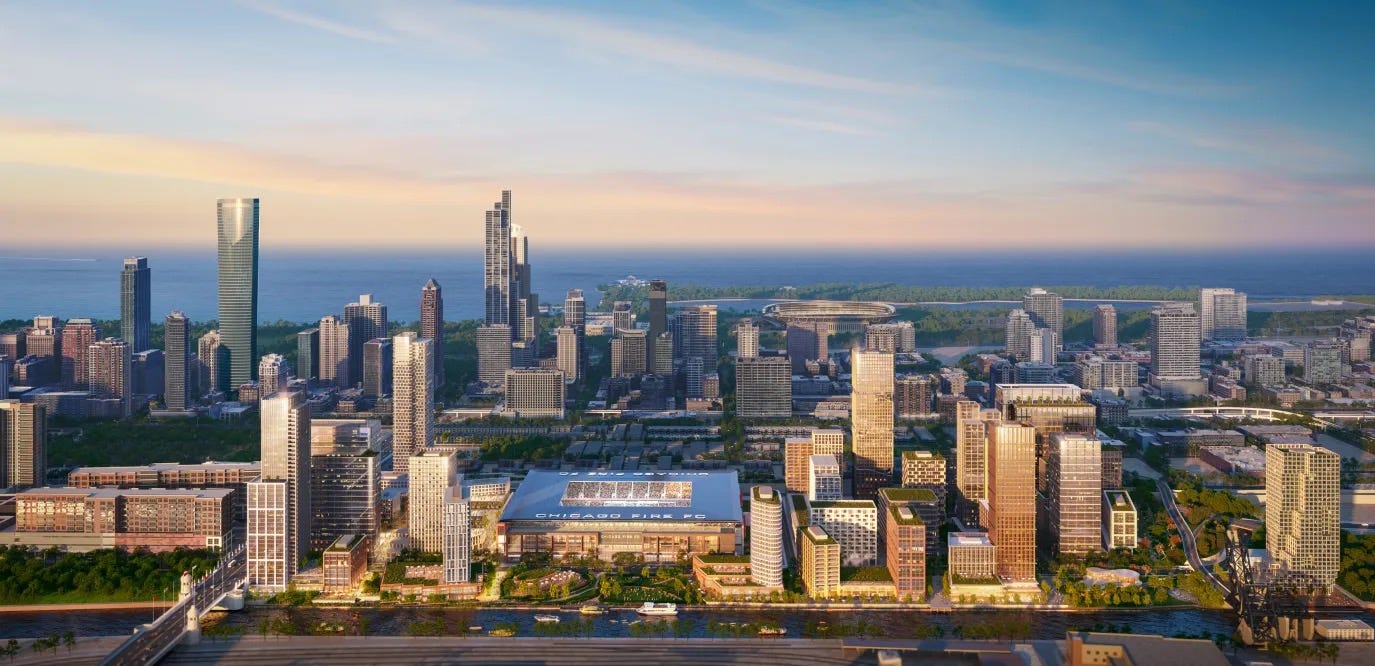
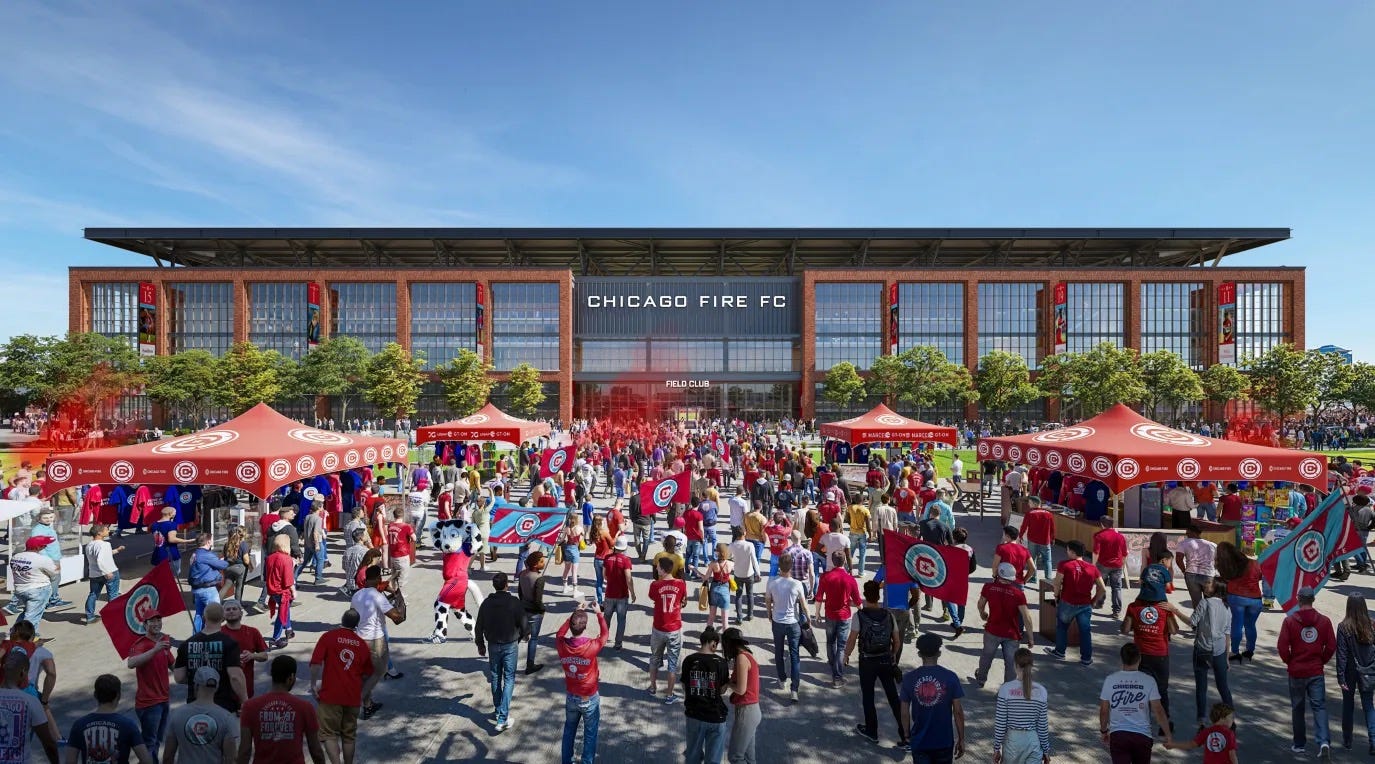
The Chicago Fire FC officially broke ground on a $750 million, 22,000-seat open-air stadium at The 78 — a 62-acre undeveloped site along the Chicago River, just south of Roosevelt Road, bordered by Clark Street, Chinatown’s Ping Tom Park, and a half-mile of riverfront that has been sitting essentially vacant since the 1970s.
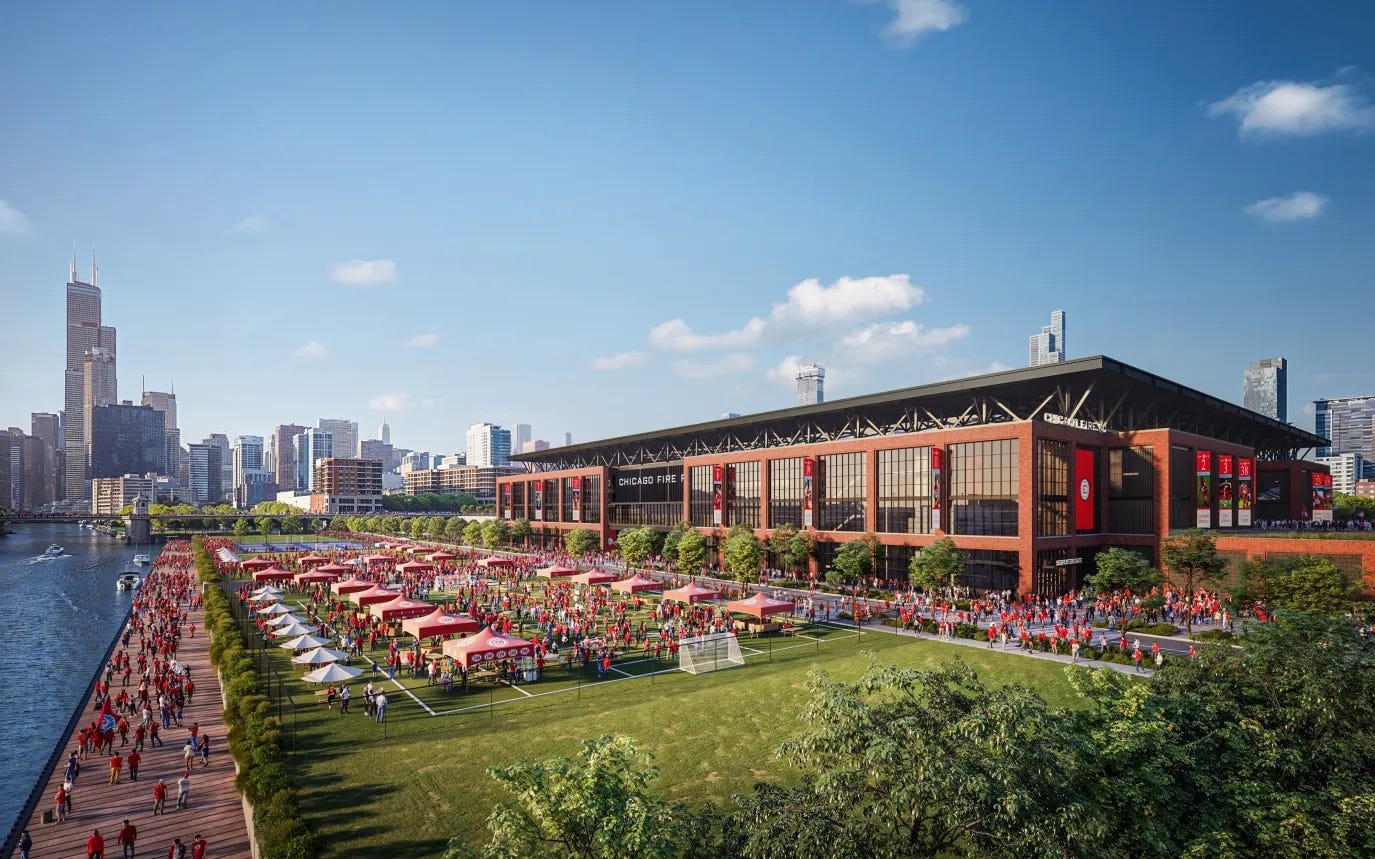
Let that sink in. Sixty-two acres of undeveloped land. Downtown Chicago. Half a mile of river frontage.
The site was a rail yard for decades, went dormant by 1977, got caught up in Tony Rezko’s ill-fated schemes in the early 2000s, and was finally acquired by Related Midwest in 2016. They’ve been patient. Now they’re moving.
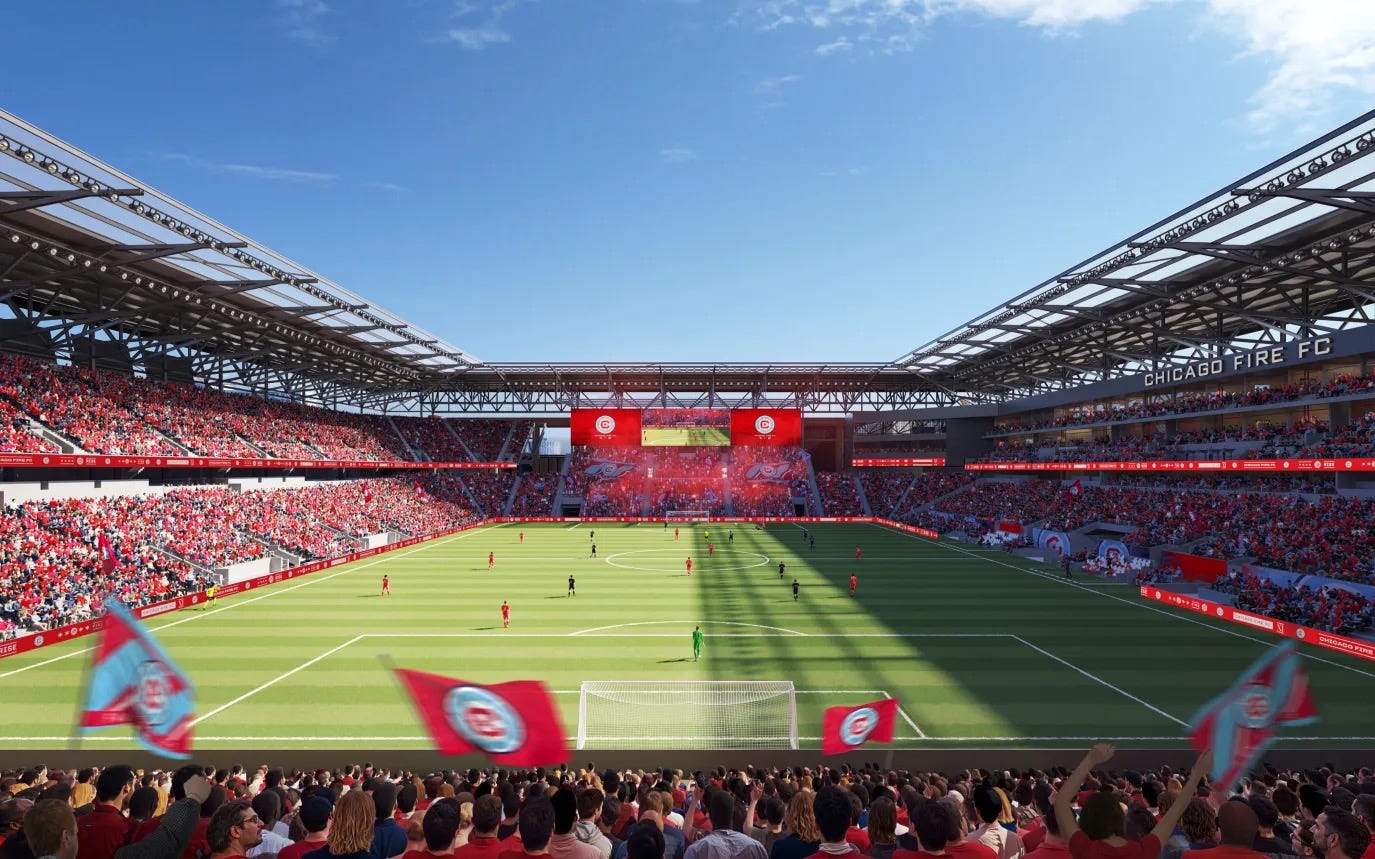
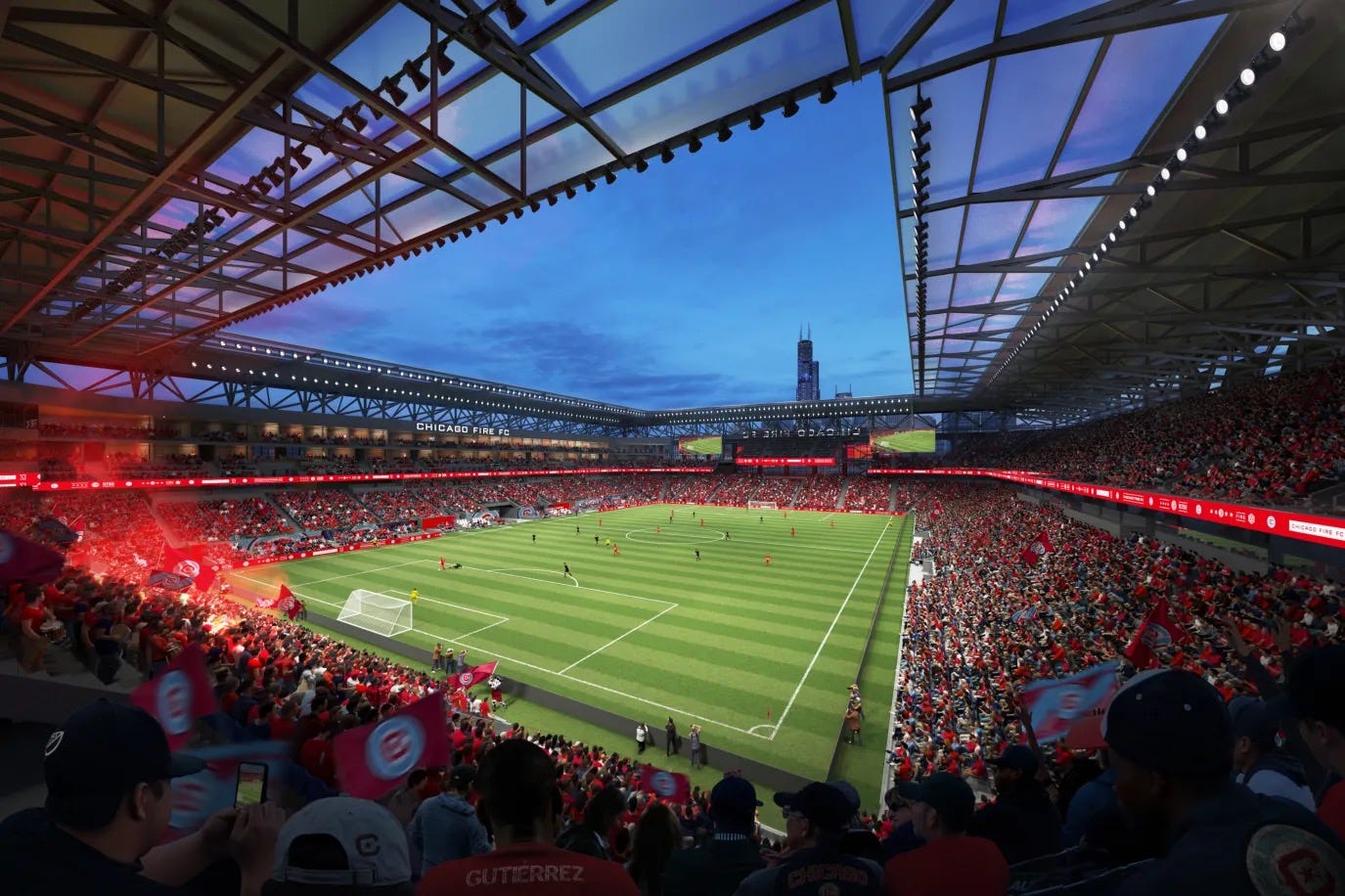
The stadium is expected to open in 2028, with broader construction at The 78 beginning in early 2026.
Why This Matters Beyond the Box Score
Anchor tenants change neighborhoods. Full stop.
We’ve seen it happen in every major city — a stadium, an arena, a major institutional tenant drops into an underserved area and suddenly the calculus for every surrounding parcel changes overnight. Cap rates compress. Land values move. Retail follows foot traffic. Residential follows retail.
The 78 isn’t just getting a stadium. According to Related Midwest, the full development vision includes new residential and commercial buildings, a half-mile riverwalk, interconnected public spaces designed for year-round programming, and significant transit access — the Red, Green, and Orange CTA lines all stop at Roosevelt and State, just two blocks east of the property.
This is not a suburban stadium surrounded by parking lots. This is a pedestrian-oriented, transit-connected urban district being built from scratch on one of the last great undeveloped sites in downtown Chicago. That is extraordinarily rare.
The Investor Opportunity Is Hiding in Plain Sight
Here’s what I’d be thinking about if I were actively deploying capital into Chicago right now:
The halo effect is already beginning. Land and assets within walking distance of The 78 — particularly along the South Loop and Chinatown corridors — are going to see sustained appreciation pressure from now through the late 2020s. Smart money doesn’t wait for the ribbon cutting.
The mixed-use thesis is validated. Curt Bailey, president of Related Midwest, put it plainly: this is a “once-in-a-generation opportunity to catalyze investment that transcends The 78.” When the developer says that publicly, they’re telegraphing that they expect the surrounding ecosystem to participate. That’s an invitation.
Multi-family demand is coming. A 24/7 district with residential, commercial, retail, and an entertainment anchor doesn’t exist in a vacuum. It needs housing — workforce housing, market-rate housing, and everything in between. The pipeline to serve residents, workers, and visitors to this district is going to be significant, and it’s not being built fast enough yet.
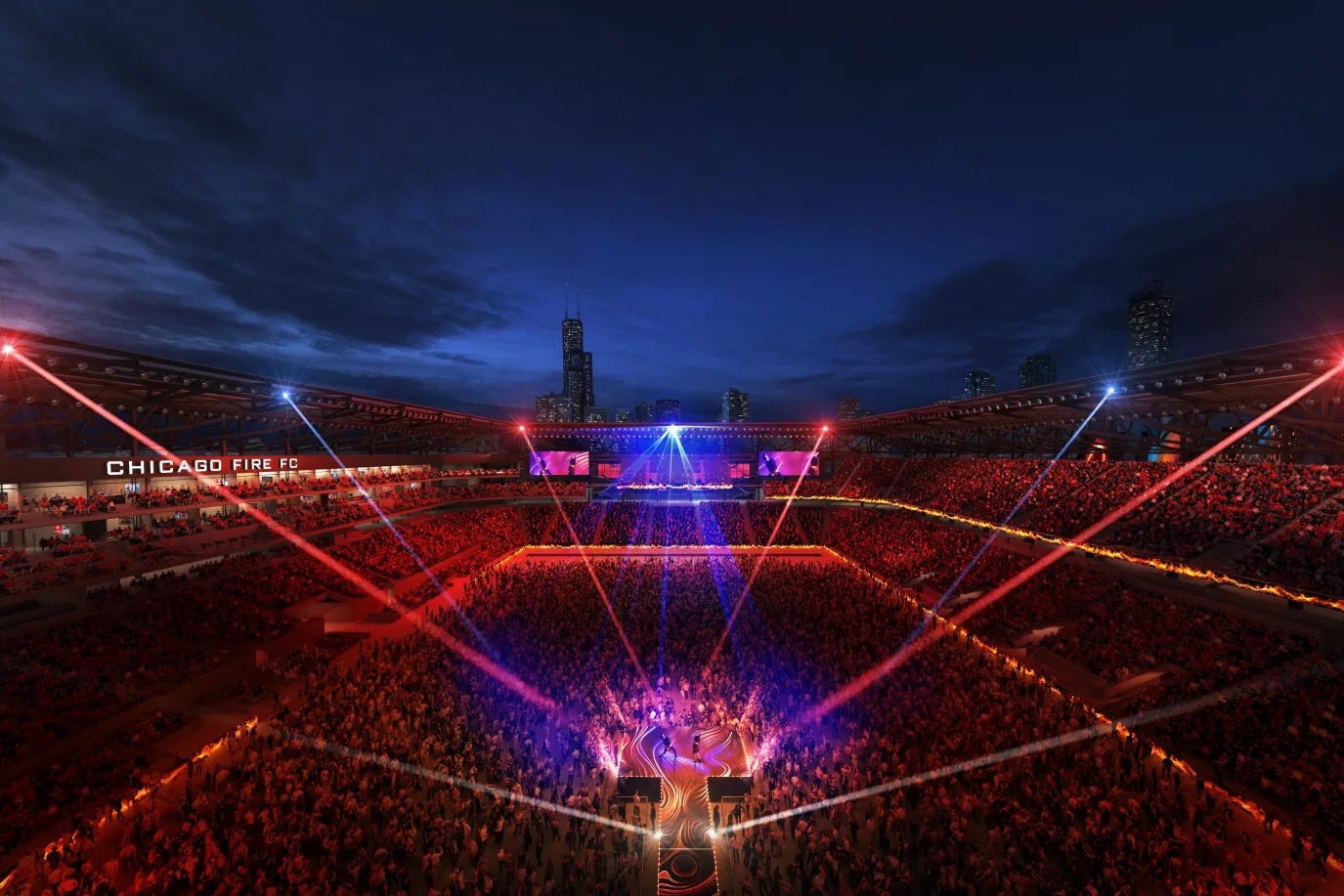
The stadium itself is an event venue beyond match days. Officials have already committed to hosting international soccer, rugby, concerts, festivals, trade shows, and more. That’s not 17 home games a year — that’s a venue operating at high utilization across multiple verticals. The hospitality and food-and-beverage opportunity around a 22,000-seat venue with 50 suites, 500 loge seats, and 3,500 club seats is considerable.
Chicago Is Doing the Right Things
Narratives lag reality. And the reality is that Chicago still has the bones that most American cities would kill for: genuine density, world-class architecture, a diversified economy, a serious university and healthcare ecosystem, and real estate prices that still reflect the old narrative rather than the trajectory.
The Fire stadium at The 78 is not an isolated event. It’s part of a pattern. Major institutional capital doesn’t commit $750 million to a greenfield urban site unless the underlying fundamentals support it. Related Midwest doesn’t spend a decade assembling a 62-acre mixed-use district unless they believe in the city’s trajectory.
This is a vote of confidence in Chicago at a moment when a lot of outside observers are still reading yesterday’s headlines.
The Bottom Line
Every major urban revitalization story has a moment where you can look back and say — that’s when it turned. The groundbreaking at The 78 has the feel of one of those moments.
The 62 acres along the river. The transit connectivity. The mixed-use vision. The $750 million anchor. The 2028 opening giving the market years of lead time to position around it.
For developers and investors paying attention, the window to move ahead of this curve is now — before the stadium opens, before the residential towers go vertical, before the retail is leased, and before the rest of the market prices in what’s coming.
Chicago is a buy. The 78 just made that case harder to argue against.
And for what it’s worth — we’re not just writing about it. We’re doing it.

Daniel Kaufman is the Principal of Kaufman & Company, a national real estate development and investment firm with 25+ years of experience across multifamily, mixed-use, workforce housing, and resort development.