
The Perception Gap
There is a version of America that lives on your feed. Population is fleeing to a handful of Sun Belt cities, everywhere else is dying, and the only real estate story worth telling is Austin, Miami, or Nashville. That narrative is emotionally satisfying. It is also incomplete, and in a lot of these markets, it is simply wrong.
The new Wall Street Journal and Realtor.com Summer 2026 Housing Market Ranking is a good reminder of that gap. It scores the 200 most populous U.S. metros on real estate demand, inventory, price trends, unemployment, wages, climate risk, and quality of life, and then ranks them. It is not a popularity contest. It is a data set.
And the data set keeps rewarding the same kind of market: tight inventory, affordable prices relative to local wages, resilient employment, low climate risk, and an anchor institution or industry that keeps demand steady. These are almost never the cities getting the headlines. They are the cities I have been pointing at in this newsletter for years.
Champaign-Urbana Is the Clearest Example Yet
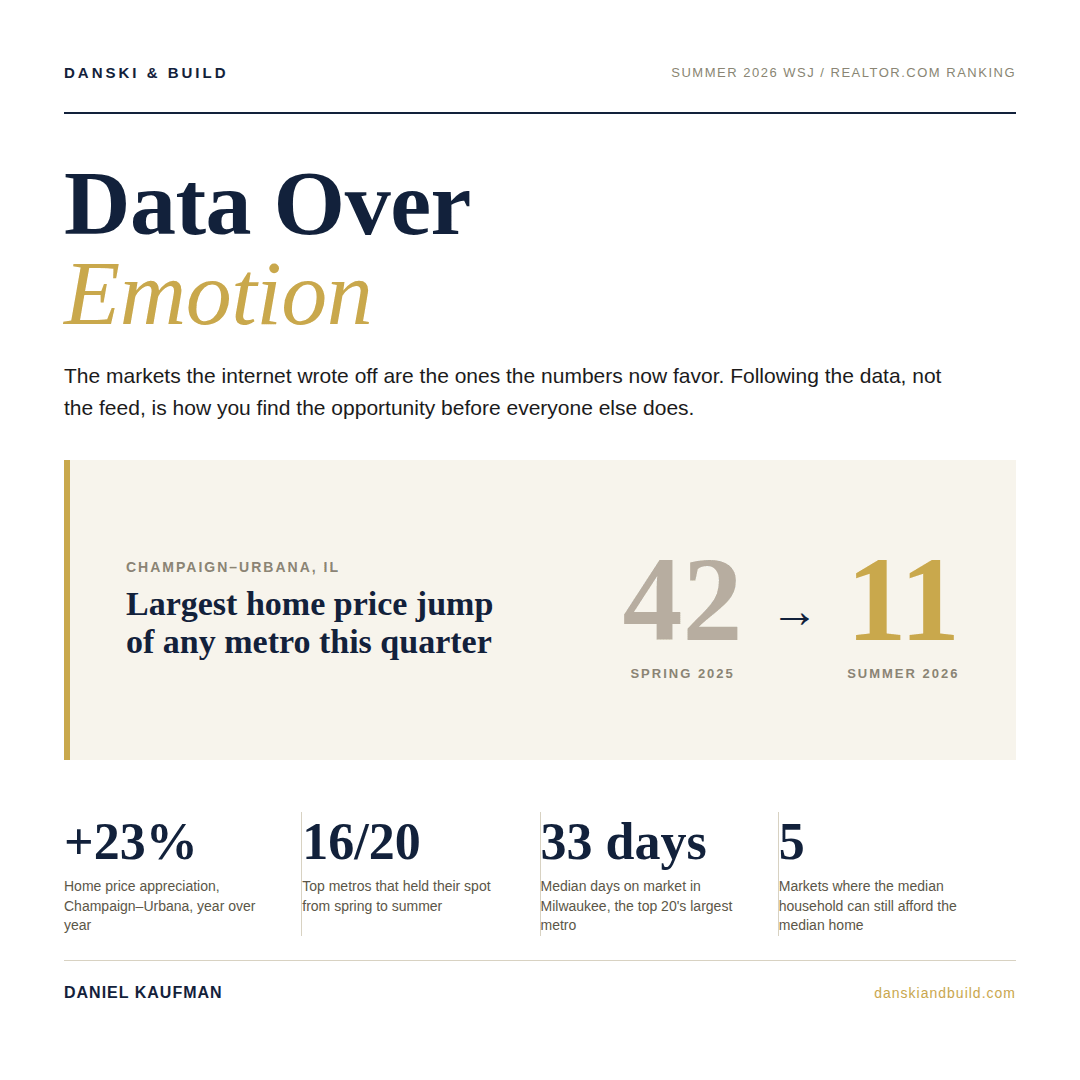
Champaign-Urbana, Illinois jumped from No. 42 to No. 11 in a single year, the single largest home price appreciation of any metro in the ranking at just over 23% year over year. This is a twin city market of under 240,000 people, two hours south of Chicago, built around the University of Illinois at Urbana-Champaign.
Nobody was talking about Champaign-Urbana on social media last year. The story here is not sentiment, it is supply. Realtor.com senior economist Hannah Jones points to inventory scarcity as the core driver, with just over 400 homes for sale in June, less than half the pre-pandemic norm. Median asking price hit $340,000 in June, up $75,000 from a year ago, and that is still $90,000 below the national median.
Underneath the price move is a real economy. The University of Illinois is a major regional employer with nationally recognized engineering and computer science programs. Its Research Park has served as a startup hub for the likes of Yahoo, John Deere, and Caterpillar. Limited land for new construction, a growing tech cluster, and very tight inventory combine to produce outsized price responses to even modest increases in demand.
That is not a fluke. That is a structural setup, and it is exactly the kind of setup this newsletter has been flagging in market after market that the coastal narrative ignores.
This Is Not a One City Story
South Bend, Indiana held the No. 1 spot for a third consecutive quarter on the strength of tight inventory, strong demand, and relative affordability. Sixteen of the summer top 20 metros also appeared in the spring ranking, which tells you this is not a one off news cycle, it is staying power. Canton, Springfield, Akron, Manchester, Milwaukee, Rockford, and Fort Wayne are the mainstays.
As Jones put it, these are not markets reacting to the moment. They are markets with structural advantages that continue to compound in their favor quarter after quarter.
Milwaukee is worth calling out specifically. At 1.6 million people, it is the largest market in the summer top 20 and has now held a top 15 spot for three straight ranking periods, landing at No. 12 this summer. Active listings sit more than 35% below pre pandemic levels even with a 10.3% year over year increase in supply, and the typical home is under contract in 33 days, nearly three weeks faster than the national norm. A lot of that demand is coming out of Chicago, where price per square foot hit $289 in June. Buyers are doing the math and relocating to where their dollar goes further, and agents on the ground are seeing it firsthand.
Five markets in this ranking, Peoria, Akron, Youngstown, Canton, and Rockford, are affordable enough that a household earning the local median income can buy the median priced home at 20% down and still have money left over after housing costs. That is not a talking point, that is math.
The Cities That Fell Out Tell the Same Story in Reverse
Four metros dropped out of the top 20 this summer, and their exits reinforce the thesis just as much as the additions do. Flint, Michigan fell from No. 10 to No. 27 as price appreciation cooled from 27.6% to 16.3%. Lansing slid 20 spots to No. 33 as price growth flipped from positive to negative 7.2%. Hartford and Kalamazoo saw smaller but similar reversals.
Champaign-Urbana, Harrisburg, Youngstown, and York, Pennsylvania took their place, on the strength of supply dynamics and price appreciation the data actually supports.
Follow the Data, Not the Feed
I keep coming back to the same point in this newsletter because it keeps proving out. The markets getting bet against on social media, written off as flyover country, dismissed as having no upside, are the same markets showing structural, repeatable, quarter over quarter strength in the actual data. The markets everyone is chasing emotionally are often the ones where the math is the least favorable.
This is not a call to ignore the Sun Belt or the coasts. It is a reminder that perception and fundamentals are two different things, and the gap between them is where the opportunity lives. We have been underwriting in these overlooked Midwest and secondary metros for years for exactly this reason: tight supply, real employers, affordable entry points, and demand that holds up because people actually want to live and work there, whether or not anyone is posting about it.
The national mood will always lag the data. That lag is the opportunity.
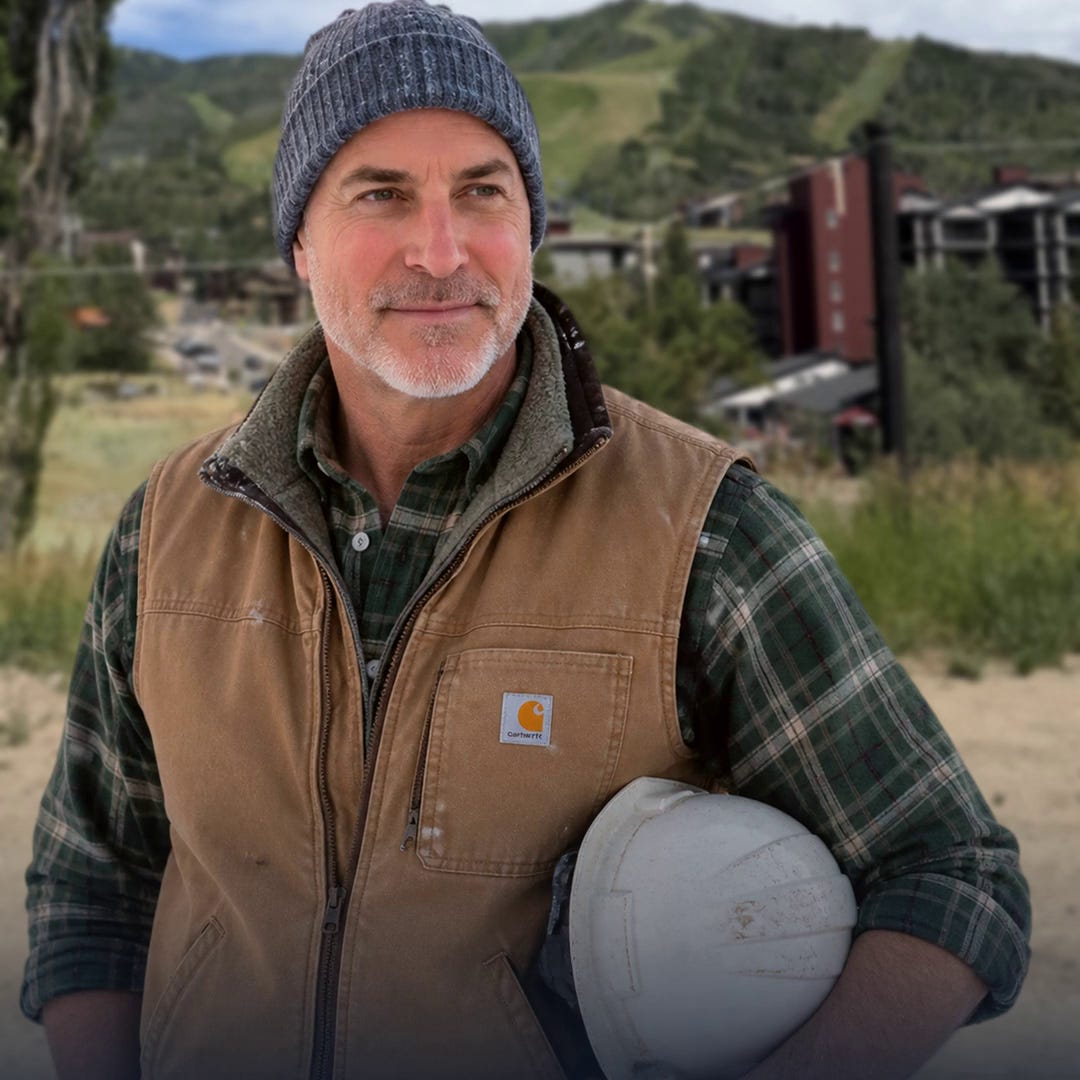
I’m Daniel Kaufman, founder of Kaufman & Company and Kaufman Real Estate & Consulting. I’ve spent more than 25 years building, financing, and investing in real estate across the country, with over $2 billion in project value across commercial hospitality, residential communities, workforce and affordable housing, modular construction, and data center and AI infrastructure. My approach stays hands on through every stage of a deal, from land acquisition and entitlement through financing, construction, and long term operations, all grounded in disciplined underwriting and a belief that building well is one of the most meaningful things you can do for the people and communities on the other end of it.
Get in touch: daniel@kaufmanredev.com | danielkaufmanre.com | Kaufman Real Estate & Consulting, 611 Wilshire Blvd, Los Angeles, CA | Connect on LinkedIn, Instagram, X, or Facebook