
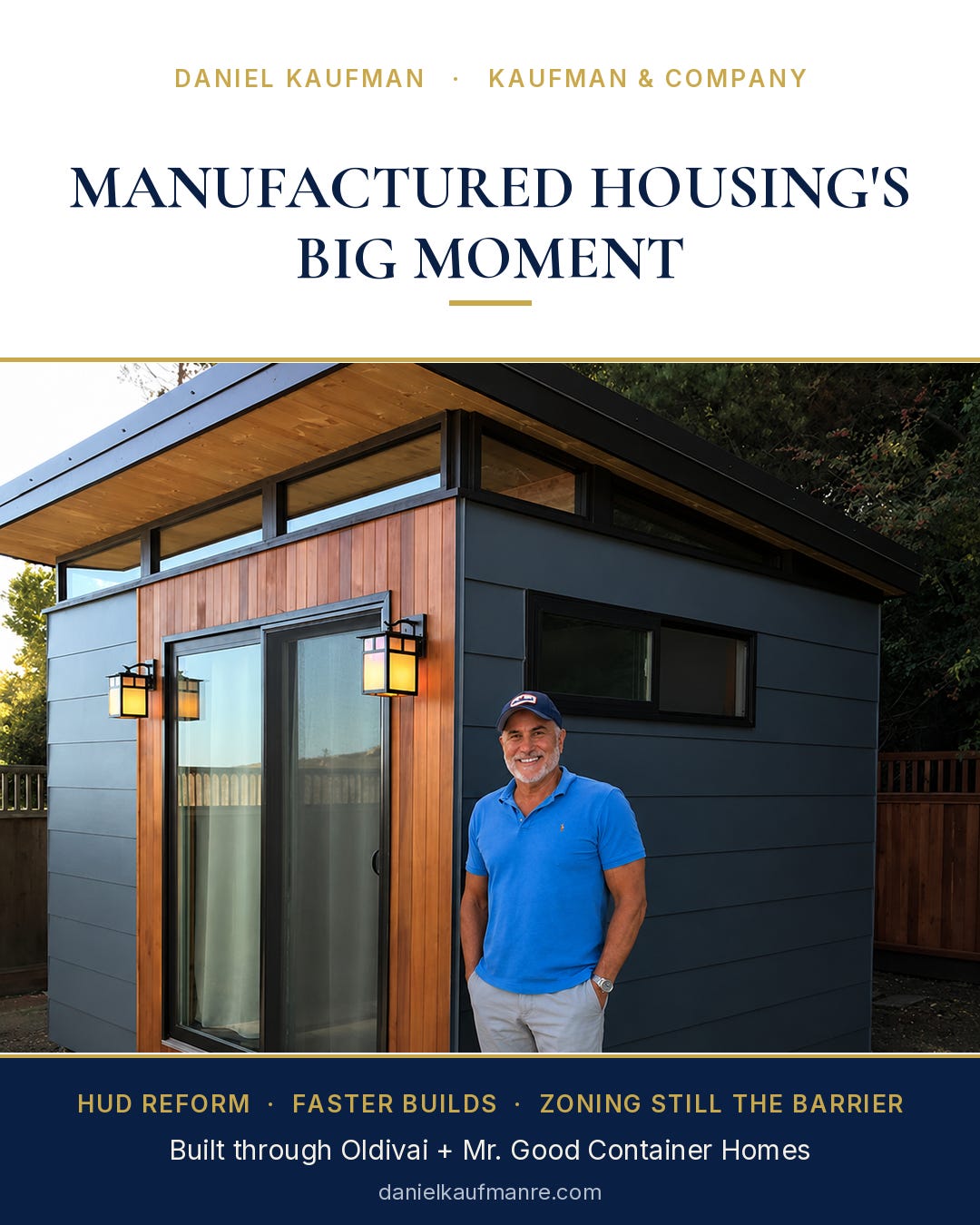
I’ve spent more than 25 years building and financing housing, from Detroit in the early 90s to the mountain resort towns I work in today. In that time I’ve watched manufactured housing get treated like the ugly stepchild of the industry. Too often it got lumped in with mobile homes and written off before anyone looked at what was actually being built. That perception is finally cracking, and the timing lines up with an affordability crisis that’s forcing every serious operator to look at faster, cheaper ways to build.
The last two years of this administration could end up being the most consequential stretch manufactured housing has seen in decades. There’s political pressure building from every direction to address the housing shortage, and manufactured housing keeps coming up as one of the few levers that can actually move the needle at scale.
The Policy Is Catching Up to the Product
2026 brought us the bipartisan 21st Century Road to Housing Act, and it includes real reforms aimed at manufactured housing. Suzanne Garwood, a managing director and associate general counsel at JPMorgan Chase, put it plainly at a recent Mortgage Industry Standards Maintenance Organization conference. She called it a direct response to the affordability crisis, and noted that manufactured housing has historically been a weak product for lenders to underwrite.
That’s changing because HUD is signaling it wants to change it. HUD is the agency that oversees the manufactured housing code, and Garwood thinks the next two years are the window for HUD to make real moves. JPMorgan itself has been pushing regulators to legalize more manufactured housing product types nationally, which tells you this isn’t just a policy talking point, it’s a bank underwriting thesis. One of the biggest items on the table is removing the permanent chassis requirement, which could open the door to multistory manufactured homes and cut real cost out of every unit.
I read that and think about every deal I’ve underwritten where the chassis requirement added cost and killed design flexibility for no good reason. Removing that one rule could reshape what gets built.
The Product Itself Has Changed
The old stigma was that manufactured meant cheap. That’s not the industry anymore. Bryan Henson, president and CEO of factory builder BevyHouse, just installed a home in fire ravaged Altadena, California, rebuilding what are often modern redesigns of decades old properties. His process lets site prep and vertical construction happen in parallel. A home that would take 18 months to custom build gets assembled in six.
That kind of timeline compression is exactly why I’ve stayed close to this space through my own container home work with Mr. Good Container Homes. When you can run site work and structure fabrication at the same time, you’re not just saving money, you’re de-risking the whole project timeline. Anyone who has carried a construction loan through an 18 month build knows what that timeline compression is actually worth.
It’s not just single-family either. PTM Partners and Peacock Capital in Florida launched Inception Housing, a vertically integrated workforce housing developer using cold-formed steel to cut welding time and procuring 90 percent of materials directly. They’re already building two complexes in the state. PTM’s Michael Tillman and Nicholas Pantuliano say the fast assembly time on their 24 to 30 unit modular buildings speeds up inspection too. Tillman’s line stuck with me: the promise of modular is that you’re shipping something over nearly fully built, but every city pulls it apart differently.
That last part is the whole ballgame, and it’s exactly what I focus on with Oldivai. Workforce housing doesn’t fail because the building science is bad. It fails because zoning, permitting, and local politics treat every jurisdiction like a blank slate. Oldivai exists because I believe the model for solving housing in mountain resort and employer anchored communities has to account for that reality from day one, not bolt it on after the fact.
Zoning Is Still the Real Barrier
Legalization is moving. Virginia and North Carolina both opened up single-family zoning to manufactured homes across most of the state, removing an extra hurdle builders used to have to clear. California is looking at backstops to help incentivize new startup factory builders. The federal bill removing the chassis requirement alone could cut up to 10,000 dollars off the cost of a home.
But the experts are right that local zoning is still the bottleneck. The minutiae in different codes make it nearly impossible to build one standardized panel or module across multiple cities. Tillman’s point about needing a more standardized zoning code to scale the business is the same conclusion I’ve come to on every workforce housing project I’ve touched. As he put it, the federal bill doesn’t pass anything on offsite prefab directly, but it legitimizes the conversation when it comes to financing. That legitimacy matters more than people think. Once lenders believe in a product type, capital starts moving toward it.
Where I Come Down
I’ve built my career on the idea that housing gets solved at the intersection of financing, construction method, and local policy, not any one of those alone. Manufactured and modular housing finally has all three moving in the same direction at once. That’s rare, and it’s why I’m paying close attention over the next two years.
If you’re a developer, lender, or municipality trying to figure out how manufactured and modular housing fits into your market, this is the moment to get in the conversation early. That’s the work I do through Oldivai on the workforce housing side and through my partnership with Mr. Good Container Homes on the container and modular construction side. Both are built around the same idea, faster construction methods only create value if you’ve already solved for the zoning and financing reality on the ground.
About the Author
I’m Daniel Kaufman, founder and CEO of Kaufman & Company. I’ve spent more than 25 years building, lending, and investing across housing markets from Detroit to the Mountain West, Texas, Florida, and the Northeast. My work today focuses on workforce housing and employer anchored development in mountain resort communities through Oldivai, and on modular and container based construction through my partnership with Mr. Good Container Homes.
If you want to talk manufactured housing, modular construction, or workforce housing strategy, reach me directly.
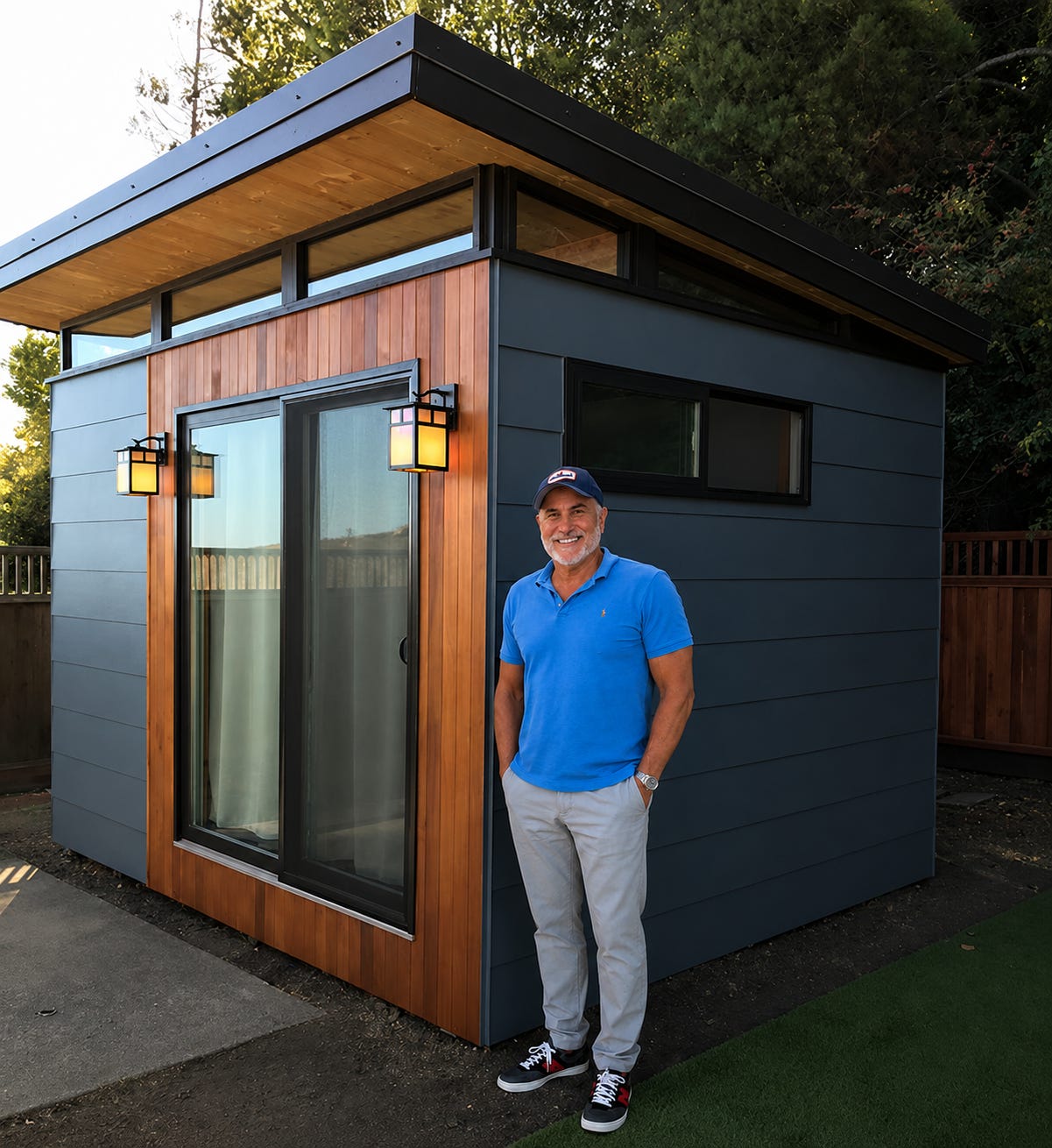
Daniel Kaufman
Email: Daniel@kaufmanredev.com
Website: www.danielkaufmanre.com
LinkedIn: linkedin.com/in/danielekaufman