
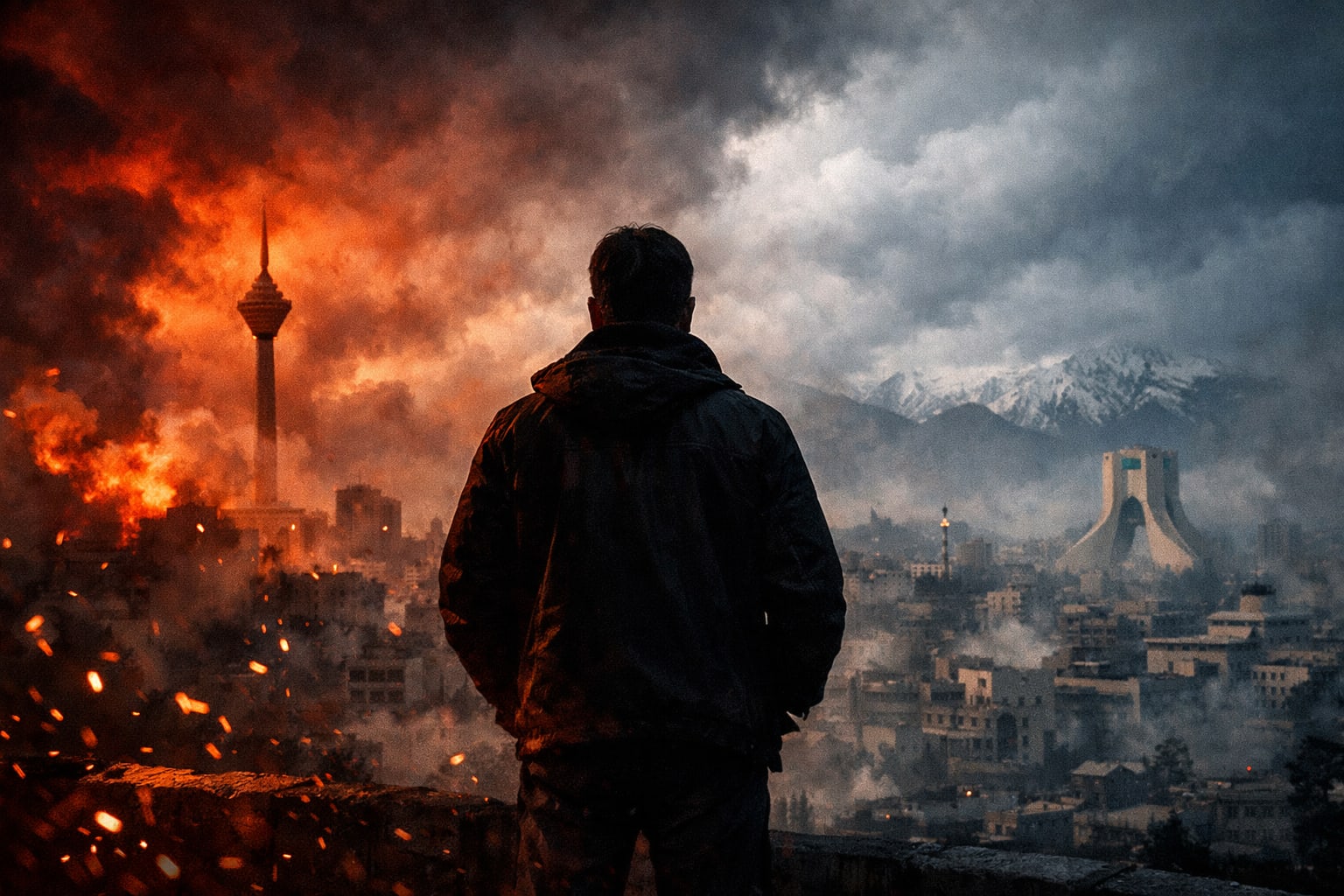
The U.S.-Israel strikes on Iran removed one of the world’s most dangerous leaders. What happens next is far less certain.
On Saturday, the United States and Israel launched coordinated full-scale military strikes against Iran. Supreme Leader Ali Khamenei is dead, along with dozens of his top military commanders. A meeting of senior leadership, according to early reports, appears to have determined the timing.
The political fallout was immediate and unsurprising. Democrats focused on the absence of Congressional authorization and the lack of any coherent post-strike strategy. Critics from both parties reached for Trump’s own 2024 campaign language — his repeated promises to keep America out of costly new foreign wars while domestic problems mounted. There is also credible reporting that Iran had been actively attempting to meet American conditions in the days before the strikes began.
The strikes were an enormous gamble. To assess them honestly requires holding two things at once: what was destroyed, and what remains unresolved.
On the first count, there is little ambiguity about the nature of the Khamenei regime. In recent months alone, it killed tens of thousands of its own citizens in response to widespread protests. It plotted the assassination of dissidents living in the United States — a fact that received far too little sustained attention in the American press. It systematically oppressed women and girls. It sponsored Hamas and Hezbollah for decades. It impoverished its population at a staggering rate: the Iranian rial lost 80 percent of its value this year alone, water rationing and power outages became facts of daily life.
Geopolitical analyst Ian Bremmer captured the calculus plainly: “There’s no world in which we’re better off with Khamenei in it.” Iran’s nuclear program, for now, is finished. That alone represents a significant shift in the global threat landscape.
On the second count — what comes next — the picture is considerably darker.
Trump has called on the Iranian people to “take over your government.” The aspiration is understandable. The obstacles are formidable.
The Iranian population is largely unarmed. The protest movement that shook the country in recent years paid an enormous price: tens of thousands killed, including many of the individuals who might otherwise have emerged as credible opposition leaders. The remaining apparatus of the Islamic Republic — its security services, its clerical networks, its parallel institutions — remains intact and highly motivated by self-preservation.
There is Reza Pahlavi, the son of the deposed Shah, who has become the symbolic center of the exile opposition. He will command significant attention in the days ahead. But Pahlavi has been outside Iran since 1979, and his actual networks inside the country are thin. Symbolic weight and organizational capacity are different things.
A well-developed underground resistance network does exist — Iranians who have sustained communication and coordination despite years of surveillance and repression. That is not nothing. But one Iranian analyst offered a sobering metaphor: the Islamic Republic is a hydra. Remove one head, and another grows in its place. The likeliest near-term scenario is that a younger figure from within the senior ranks of the republic assumes power, with similar ideology and sharper survival instincts.
The immediate costs are already tallying. Hundreds of Iranian civilians are dead. At least three American soldiers have been killed. Iran’s retaliatory strikes have not been limited to U.S. and Israeli targets — unaffiliated actors in the region have been hit as well. Early signals suggest new Iranian leadership has reached out to Washington seeking a ceasefire, even while simultaneously signaling escalation.
The questions that will define this moment remain open. How long do the strikes continue? Does the conflict widen? What does American follow-through actually look like — or is there any?
One Iranian, speaking after news of Khamenei’s death broke, put it this way: “We have felt entirely alone. Now we know that we are not.”
That sentiment is real. So is the uncertainty that follows it.
The Iranian people deserved a better future. Whether they get one is still an open question.