
I was wearing an Eddie Bauer ski jacket last week.
It’s still a good jacket. Warm, functional, familiar. The kind of piece you don’t think much about until you hear the news that the company behind it is once again on the brink of bankruptcy and closing down its store fleet. And then suddenly it’s not just a jacket, it’s a reminder of how many legacy retail brands have slowly drifted out of relevance without fully realizing it.
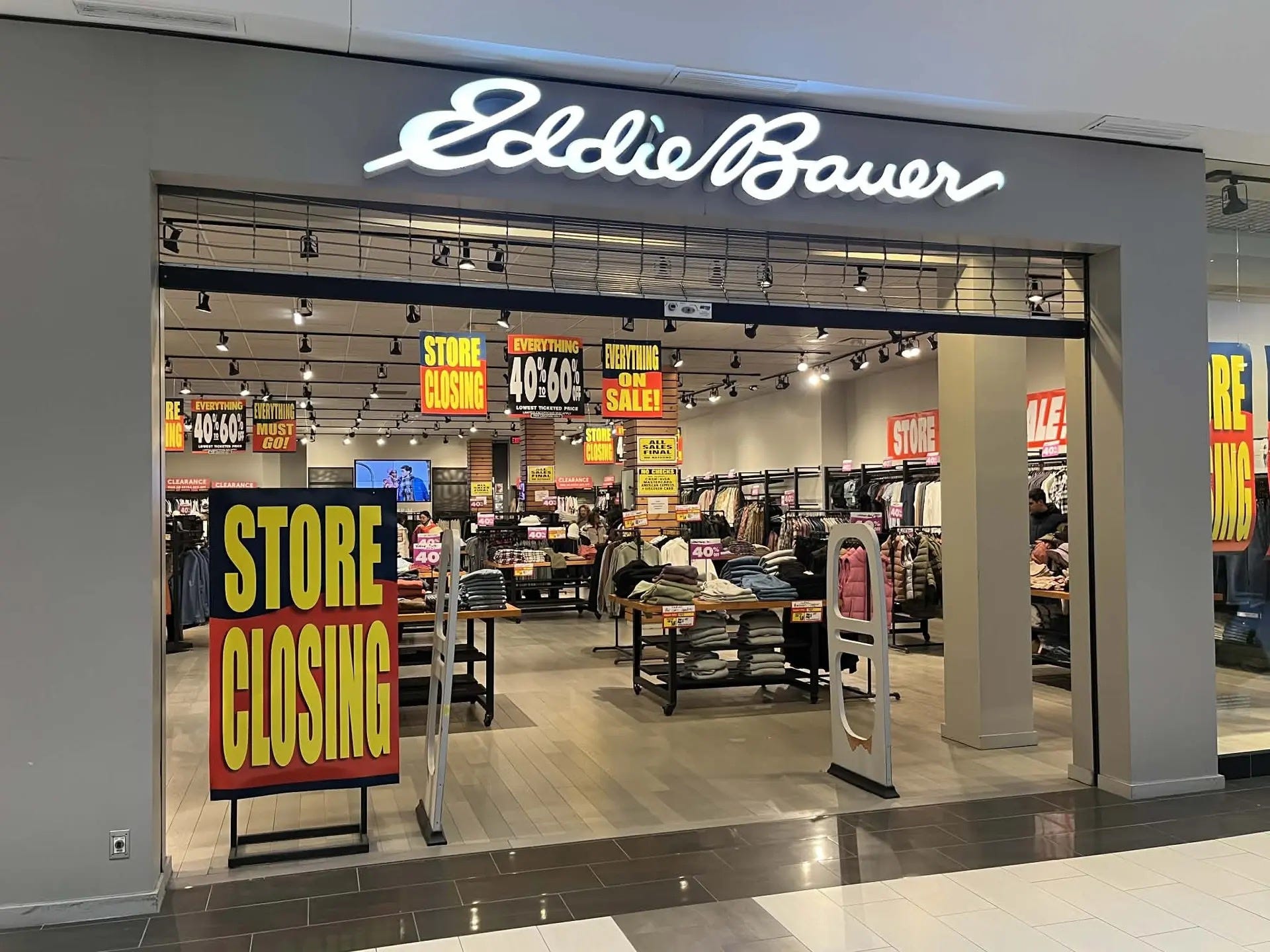
This week, Eddie Bauer began liquidation sales across roughly 180 brick-and-mortar locations in the U.S. and Canada. The store operator, Catalyst Brands, is preparing to file Chapter 11, which would mark the third bankruptcy tied to Eddie Bauer’s retail business since 2003. If that filing proceeds as expected, most, if not all, physical stores will close, though there is some speculation that a handful of locations could be sold to new buyers.
What’s striking is not just the bankruptcy itself, retail restructurings are no longer shocking, but how predictable this outcome feels.
Eddie Bauer is more than 100 years old. It pioneered the quilted down jacket. For decades, it occupied a comfortable middle ground in outdoor apparel, practical, reliable, not flashy. For a long time, that was enough. But the market moved, consumer expectations shifted, and Eddie Bauer never quite made the leap.
Today’s outdoor consumer is different. Technical performance matters. Brand storytelling matters. Cultural relevance matters. Companies like Fjällräven and Arc’teryx don’t just sell jackets, they sell identity, aspiration, and credibility within very specific communities. They invest heavily in product innovation and communicate relentlessly about why their gear is superior.
Eddie Bauer, by contrast, ended up in an uncomfortable place, too technical to compete on price with mass-market brands, but not technical or culturally sharp enough to stand alongside the premium players. Analysts have been blunt about it, describing the brand as “old-fashioned” and increasingly irrelevant to younger shoppers. There have also been persistent concerns about declining product quality, which is fatal for an outdoor brand whose credibility depends on performance in real conditions.
Ownership churn didn’t help. Over the past two decades, Eddie Bauer has passed through multiple hands, Spiegel, Golden Gate, SPARC, and now Catalyst, the latter formed through the merger of SPARC and JCPenney. Each transition came with financial engineering, licensing structures, and operational resets, but none solved the core issue, what does this brand stand for now, and who is it truly for?
The current setup underscores that fragmentation. Authentic Brands Group owns the intellectual property. Catalyst operates the stores. Manufacturing, e-commerce, and wholesale are being transitioned to a new partner, Outdoor 5. The brand will likely survive online and through wholesale channels, but the physical retail footprint, the most visible expression of the brand, is collapsing.
This isn’t just an Eddie Bauer story. It’s part of a broader pattern playing out across U.S. retail. Amazon Fresh is closing stores. Saks Off 5th is shrinking. Francesca’s, American Signature Furniture, the list keeps growing. Even brands with strong name recognition and decades of history are discovering that familiarity is not the same as relevance.
From a real estate and capital markets perspective, this matters. Mall-based retail remains under pressure. Operators tied to legacy formats are struggling to adapt quickly enough. And while e-commerce continues to absorb demand, it doesn’t replace the economic role that large retail footprints once played in mixed-use developments, shopping centers, and urban corridors.
I’ll probably keep wearing that Eddie Bauer jacket for a while. It still works. But the brand behind it has become a case study in what happens when incremental change replaces decisive reinvention. In today’s retail environment, standing still is effectively moving backward.
Eddie Bauer didn’t fail overnight. It faded. And that slow fade is becoming one of the defining risks across the retail landscape.