
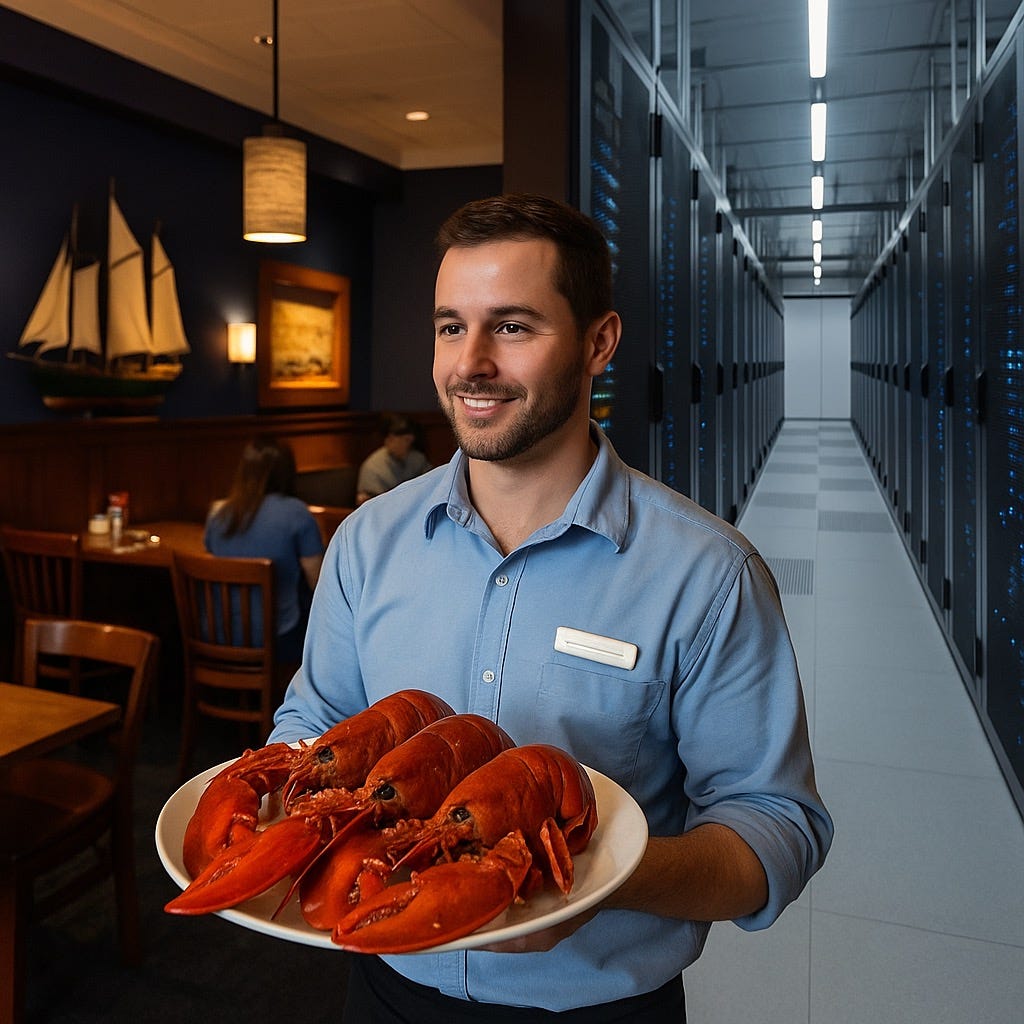
Every day, it seems like another industry announces its big move into AI. The latest? Red Lobster.
Yes, the same seafood chain known for Cheddar Bay Biscuits is now rolling out an AI-powered phone agent to handle takeout orders. The technology, built with SoundHound AI, will soon be live across every restaurant. Investors loved it—SoundHound’s shares jumped on the news.
On the surface, it’s quirky: can the bot even handle an order as wild as rapper Flavor Flav’s stunt last year when he ordered the entire Red Lobster menu to save the chain? But step back, and the message is clear: AI is no longer just about coding copilots or fancy chatbots. It’s moving into the most ordinary parts of daily life—ordering dinner, booking reservations, or scheduling service calls.
And while AI quietly takes over the everyday, an entirely different battle is playing out at the other end of the spectrum: the trillion-dollar arms race in AI infrastructure.
The Race for Gigawatts
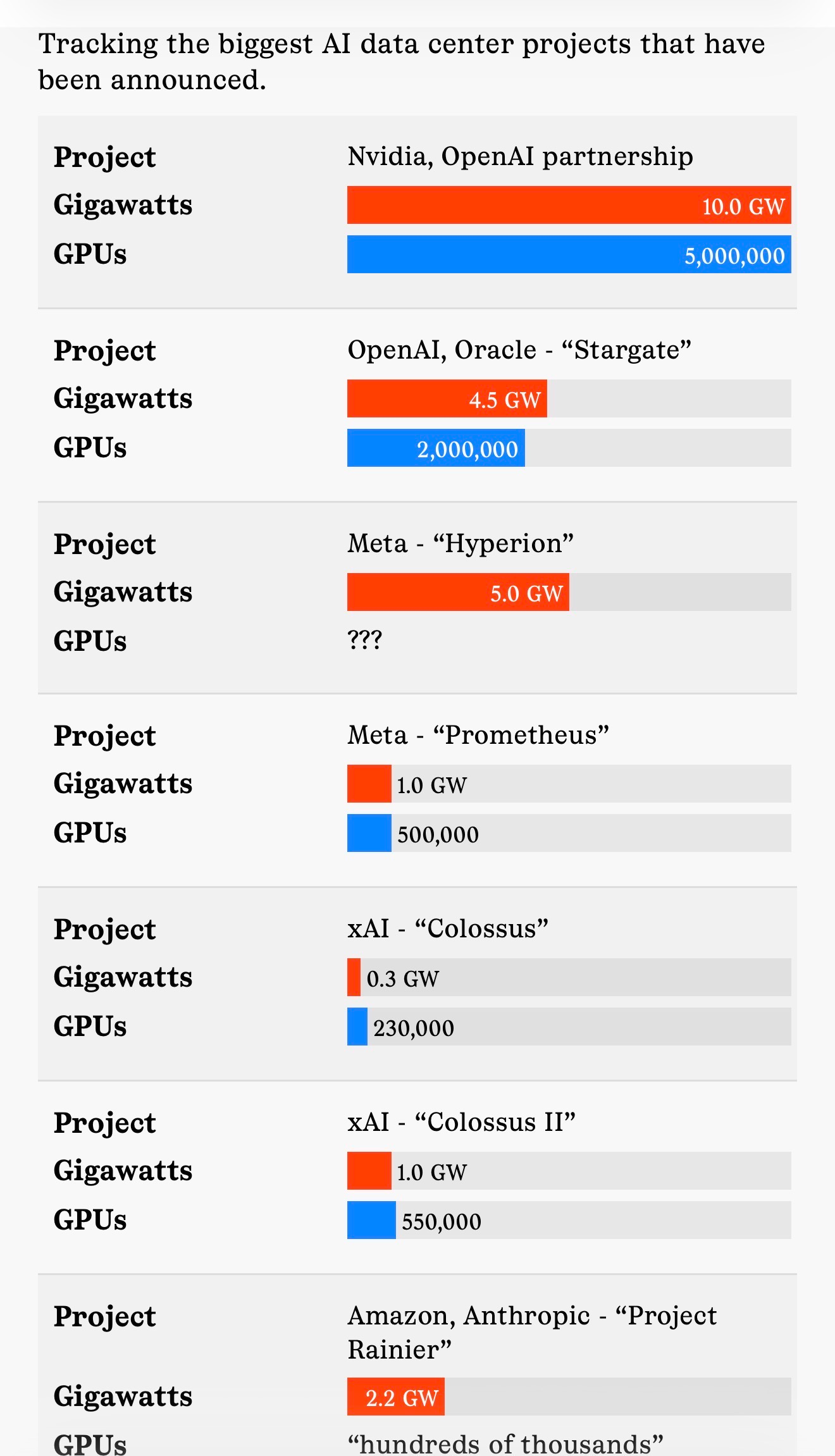
The scale of investment in AI data centers is staggering. Forget billions—we’re now talking hundreds of billions, even trillions, being poured into projects with names that sound more like Greek myths than server farms: Hyperion, Colossus, Prometheus, Stargate.
-
Nvidia + OpenAI: $100B partnership to build 10 gigawatts of computing power—equivalent to powering 8 million homes for a day.
-
Project Stargate: A Texas-based OpenAI/Oracle/SoftBank plan for 4.5 gigawatts, originally priced at $500B (and still in flux).
-
Meta’s Hyperion & Prometheus: Multi-gigawatt “titan clusters” in Louisiana and Ohio, designed to push the company toward superintelligence.
-
Elon Musk’s Colossus I & II: A 230,000-GPU facility built in Tennessee in just 122 days, with a second already underway that will double capacity.
-
Amazon + Anthropic’s Project Rainier: 30 interconnected data centers in Indiana, powered by Amazon’s Trainium 2 chips.
-
Microsoft’s Fairwater: A massive Wisconsin site housing “hundreds of thousands” of Nvidia GPUs, cooled with cutting-edge closed-loop liquid systems.
Add it up, and we’re looking at close to a trillion dollars in commitments. Meta’s Mark Zuckerberg even admitted it might be a bubble—but shrugged that “misspending a couple hundred billion” was worth it to ensure his company isn’t left behind.
Why Both Ends of the Story Matter
It’s easy to laugh at Red Lobster’s AI phone agent and gawk at Nvidia’s $100B megadeal, but they’re actually two sides of the same coin.
-
Consumer adoption: The Red Lobster story shows how AI is sliding into daily consumer interactions—one phone call at a time. These small-scale use cases normalize the technology, build trust, and create sticky business efficiencies.
-
Infrastructure arms race: On the other end, data center megaprojects reveal how much money the largest companies in the world are willing to bet on AI’s future. They’re building the “steel mills” of the digital economy—the foundation everything else will run on.
For real estate developers and investors like me, this has immediate implications. These data centers are not abstract—they’re massive land plays, power grid negotiations, and construction opportunities. Entire regions will be reshaped by where these facilities land and how much energy they demand.
And for anyone watching consumer markets, Red Lobster is the canary in the coal mine. If AI can streamline something as mundane as a takeout order, it can—and will—embed itself into nearly every transactional moment of our lives.
The Central Point
AI isn’t just for Silicon Valley anymore. It’s in your dinner order and it’s in the trillion-dollar bets being made on the future of computing.
From the restaurant table to the data hall, AI is reshaping industries in real time. The winners—whether restaurants, tech giants, or real estate developers—will be those who understand that adoption isn’t happening someday down the road. It’s happening right now, across every layer of the economy.