
For two years, the entire commercial real estate industry has been waiting for the same thing: rate relief. Yesterday the Fed told us to stop waiting.
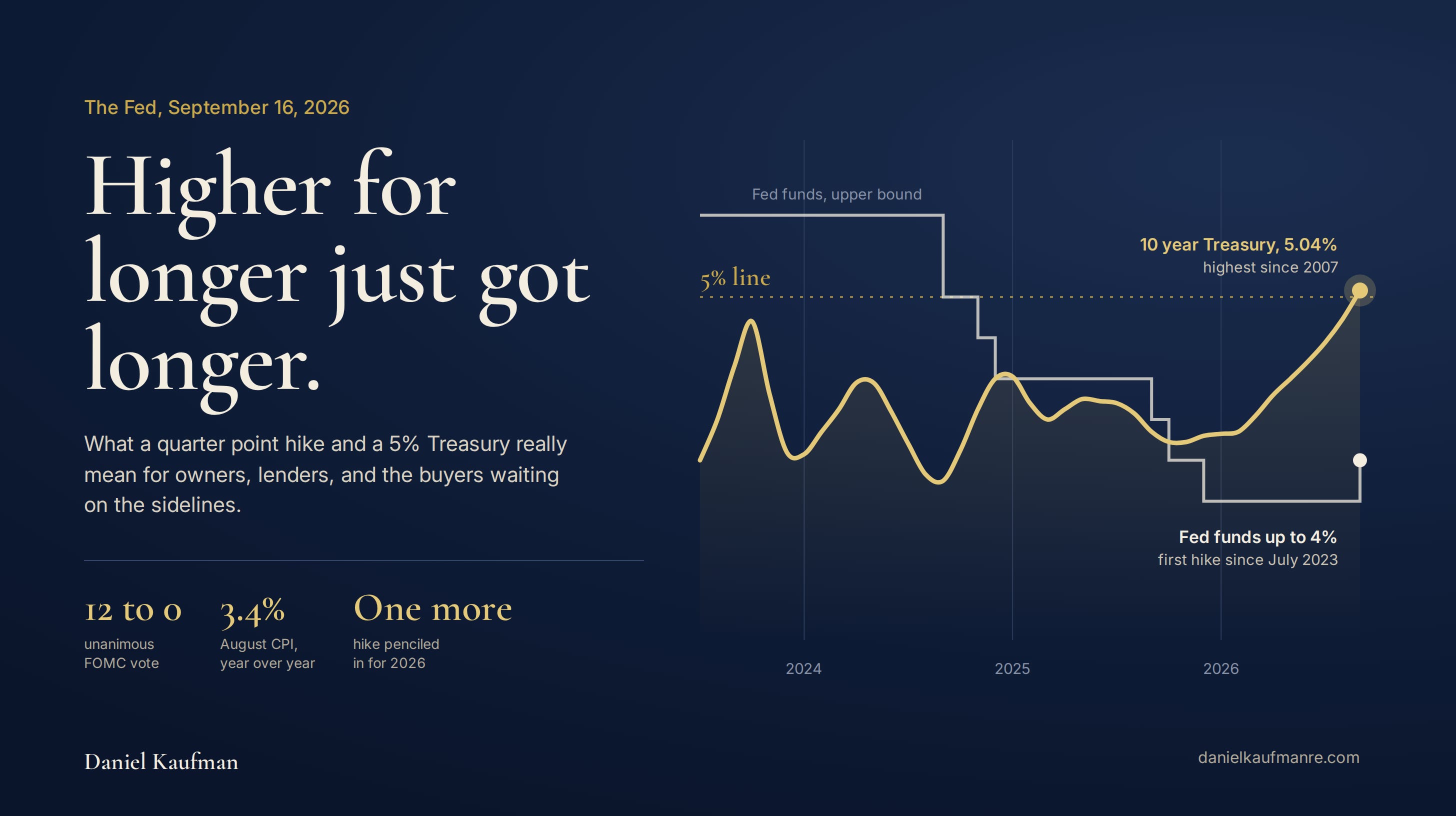
The Federal Reserve raised its benchmark rate by 25 basis points to a target range of 3.75% to 4%, its first increase since 2023. The vote was unanimous, and the dot plot shows the Fed expects to hike one more time in 2026. The move ended roughly nine months of holding steady, driven by high inflation tied to rising oil prices and supply disruptions in the Middle East.
I’ve been building, lending, and investing through rate cycles since I started in Detroit in 1992. I’ve seen what a quarter point does to a deal, and I’ve seen what it doesn’t do. So let me cut through the headlines and tell you what I actually think this means.
The quarter point is noise. The 5% is signal.
A 25 basis point move on the short end doesn’t break a well structured deal. What matters for real estate is the long end of the curve, and the long end is flashing.
The 10 year Treasury reached 5.041% on September 15, its highest level since 2007, and it moved back above 5% after the Fed’s decision and Chair Kevin Warsh’s comments on persistent inflation. That’s the rate that prices our permanent debt, our cap rates, and the return every investor demands before they write a check.
Parkview Financial CEO Paul Rahimian made the point well this week: the 10 year controls real estate valuations and capital markets, not the Fed funds rate. If you’re underwriting off the short end and ignoring the long end, you’re underwriting the wrong number.
Homeowners feel it too. Thirty year fixed mortgage rates remain elevated at 6.76%, which keeps pressure squarely on the affordability problem I’ve been writing about for years. When buying a home stays out of reach, that demand doesn’t disappear. It moves into the rent roll.
Why the Fed did it
This wasn’t a surprise, and it wasn’t reckless. Warsh pointed to consumer prices rising 3.4% year over year in August, well above the 2% target. Oil prices spiked on escalations in the conflict with Iran, and those energy costs have started showing up in inflation reports.
Here’s the part people are skipping: the Fed isn’t signaling a long tightening campaign. The dot plot showed 16 of 18 participants expecting at least one more increase this year, with nothing penciled in beyond 2026, one cut indicated for 2028, and at least one more in 2029. Read that again. Relief isn’t coming next quarter or next year. Anyone whose business plan depends on a 2027 refinance at lower rates needs a new business plan.
The negatives: where the pain lands
The refinance wall gets taller. The owners who get hurt aren’t the ones with long term fixed debt. It’s the ones with near term maturities, floating rate loans, and extensions they were counting on. Multifamily properties financed with floating rate bridge loans in 2021 and 2022, when borrowing was far cheaper and rent growth expectations were stronger, are a known weak spot. I’ve looked at a lot of those capital stacks. Many of them only worked if rates came back down.
Extend and pretend is ending. Baker Tilly’s Brent Maier said this hike could speed up the shift away from extensions, with lenders pushing borrowers to put in fresh equity, restructure, or sell. I agree completely. Lenders gave borrowers time because they believed rates would fall. That belief just took a hit, and patience is going to run out faster.
Distress keeps building. The share of distressed commercial real estate loans rose for three straight months to 10.8% in July. A higher rate environment doesn’t reverse that trend. It feeds it.
Development math gets harder. Every basis point on a construction loan comes straight out of the margin. On a $30 million construction loan, a quarter point is another $75,000 a year in interest, before you even talk about what a higher exit cap rate does to your valuation. Marginal projects that penciled at 4% money won’t pencil now. Some of them shouldn’t have been started in the first place.
Housing supply falls further behind. This is the one that worries me most. When development stalls, the housing shortage doesn’t pause. It compounds. Fewer starts today means tighter supply and higher rents in 2028 and 2029, which lands hardest on the workforce households who can least absorb it.
The positives: yes, there are real ones
Inflation credibility can bring long rates down. This is the counterintuitive point. A Fed that’s serious about inflation is exactly what bond investors need to see before they’ll accept lower yields on the 10 year. Rahimian argued the tougher stance could ultimately help pull Treasury yields down, and I think he’s right. Short term pain on the Fed funds rate may be the price of long term relief where it actually matters.
Price discovery finally arrives. The biggest problem in this market hasn’t been rates. It’s been a bid ask gap that wouldn’t close because sellers kept waiting for a rescue. This hike removes the rescue. Sellers facing maturities are getting more flexible on price, and that’s how deals start trading again, sometimes below replacement cost.
Capital hasn’t left the building. Don’t mistake stress for a frozen market. U.S. commercial real estate investment hit $74.4 billion in July, the highest July total since 2005 and 78% above a year earlier. The money is there. It’s just getting a lot more selective.
Fundamentals separate from leverage. Industrial, data centers, and infrastructure keep attracting capital, while overleveraged and marginal projects get squeezed. That’s a healthy sorting, and it’s a big reason I’ve spent so much time on data center and infrastructure work. When the cost of money goes up, real demand and durable income are what get funded.
The disciplined buyer gets paid. Every cycle I’ve been through has the same pattern. The operators who overextended in the easy money years become sellers. The operators who kept dry powder and conservative leverage become buyers. This hike accelerates that handoff.
What to watch next
Duration matters more than the headline number. Strategists told CNBC that markets can usually absorb a brief move above 5%, but a sustained stretch of six to twelve months or more becomes much harder to ignore, and a 5% yield held for two or three quarters would make refinancing pressure increasingly difficult to avoid.
On timing, Goldman Sachs Asset Management expects the Fed will likely skip its October meeting given how close it falls to the midterm elections. That puts December squarely in play for the second hike.
My playbook for the next 12 months
If you own, build, or lend, here’s how I’d be thinking right now.
-
Underwrite at today’s rates, not the rates you hope for. If a deal only works with a cut, it doesn’t work.
-
Push exit cap rates higher in your models. A 10 year at 5% doesn’t support the exit caps a lot of 2021 pro formas assumed.
-
Get ahead of your maturities. Call your lender now, while you still have options. The borrowers who show up early with a plan get better outcomes than the ones who show up late with an excuse.
-
Keep equity ready. The best opportunities over the next year will go to buyers who can close with certainty, not buyers who need perfect financing.
-
Follow demand, not narrative. Workforce housing, data centers, and infrastructure have real demand behind them. Build where the demand is durable.
The takeaway
Rates didn’t kill deals. Bad capital structures kill deals. This hike doesn’t change what makes a good project. It just stops hiding the bad ones.
Higher for longer is now the base case, not the risk case. The owners who accept that first will be the ones buying from the owners who accept it last.
If this was useful, subscribe so you get my next breakdown the day news breaks, and share it with someone sitting on a maturity in the next 18 months. They need to read it more than you do.
And if you have a site, a deal, or a capital stack that needs a new plan in this rate environment, reach out. I’d rather talk before the maturity date than after.
About the Author
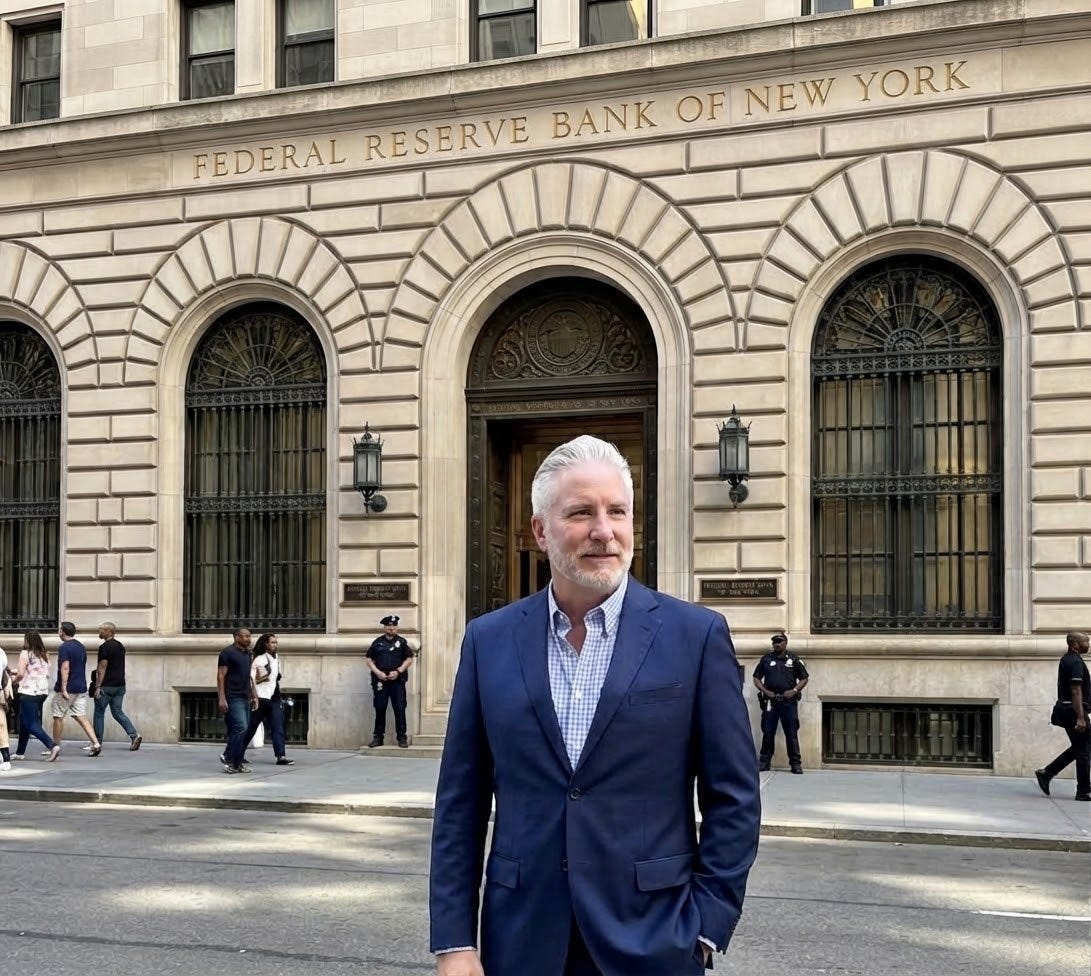
Daniel Kaufman is a real estate developer, investor, and the Founder and CEO of Kaufman & Company, a private investment and holding firm spanning real estate development, venture investment, and infrastructure. He began his real estate career in Detroit in 1992 and has spent more than 25 years building, lending, and investing across housing markets nationwide, overseeing more than $2 billion in project value, including more than 1,800 affordable and mixed income units. His work spans build to rent communities, mixed use development, workforce housing, hospitality, and data center infrastructure. You don’t need another opinion. You need someone who’s done it.
Contact
Email: Daniel@kaufmanredev.com
Phone: (341) 217 2580
Website: www.danielkaufmanre.com
Kaufman & Company: www.thekaufmanco.com
LinkedIn: linkedin.com/in/danielekaufman