
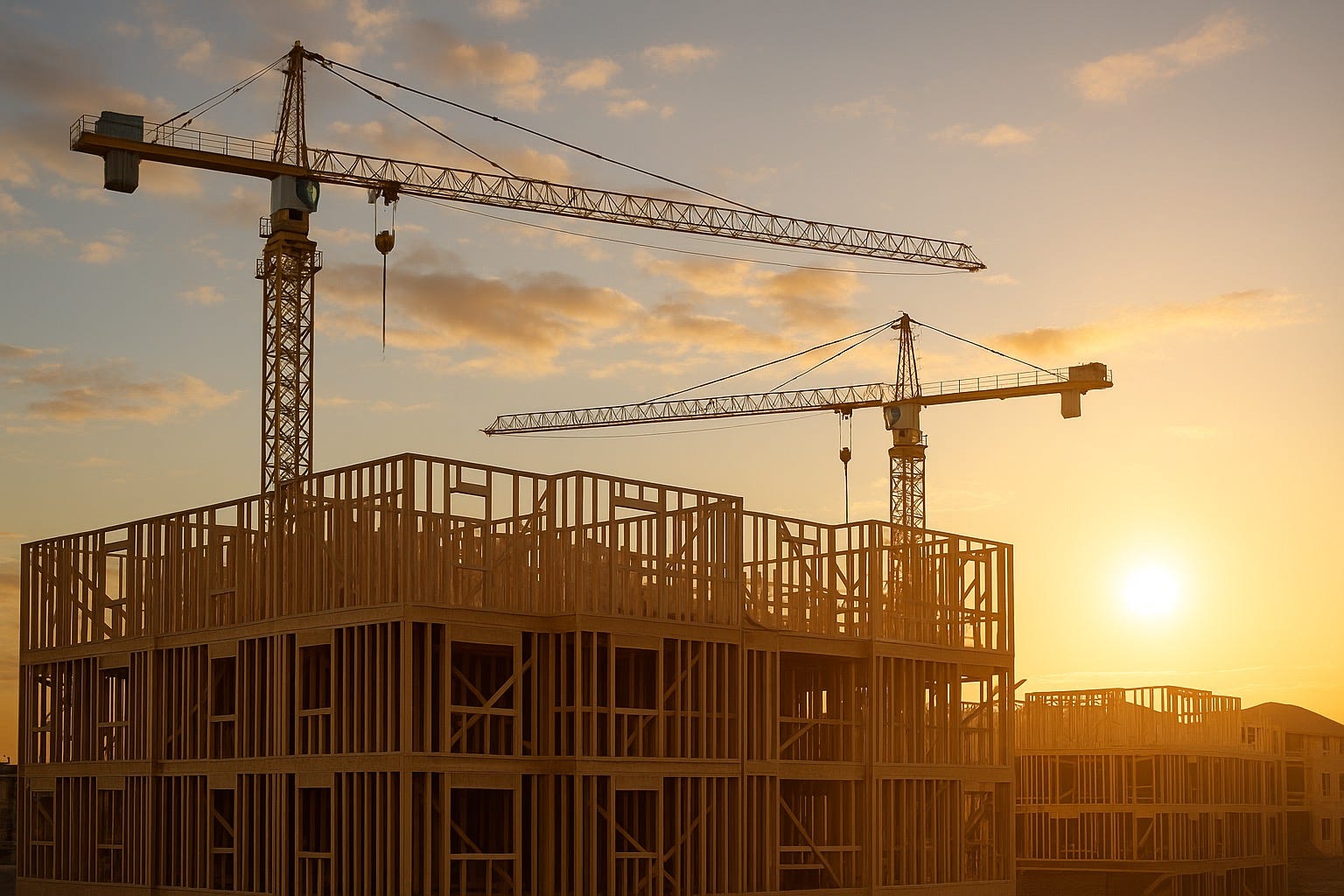
Housing affordability isn’t going to be solved through political pressure or sound bites. It’s a cost problem — and until we address what it actually costs to build, prices aren’t coming down.
The Political Optics
The latest round of calls from President Trump and FHFA Director Bill Pulte for major homebuilders to “step up” production makes for good politics, but bad economics. It assumes that builders are sitting on the sidelines, waiting to jump back in. In reality, many large builders — Lennar, DR Horton, PulteGroup — are already pushing production as far as their balance sheets and labor capacity allow.
The issue isn’t output. It’s the cost structure underneath it.
Profits Tell a Different Story
Margins are already under real pressure. Publicly traded builders are offering steep rate buydowns, closing cost credits, and spec inventory discounts to keep absorption rates steady. Yet even with those incentives, demand has softened, inventories have grown, and profitability has slipped. Lennar, for example, is sitting on the highest number of unsold new homes since 2009.
That’s not the sign of an industry holding back. It’s the sign of one that’s running at full tilt in an economy that’s increasingly stacked against it.
More Homes ≠ More Affordability
Politicians often treat supply as the silver bullet. “Just build more.” But that overlooks where the real friction lies: the cost to produce each unit.
Tariffs on materials like lumber, drywall, and cabinetry have added tens of thousands to the average home price. Immigration policies have constrained the construction labor pool. Land use regulation and zoning restrictions keep entitled lots scarce and expensive. Every one of those factors feeds directly into the end price the buyer pays.
Builders can’t absorb those costs indefinitely. They get passed along — or projects get shelved. Either way, affordability doesn’t improve.
A Blunt Tool With Real Risks
Pushing production without fixing inputs risks destabilizing the entire housing ecosystem. The largest builders can survive margin compression for a while. Smaller builders — the ones who drive local and infill development — can’t.
If policymakers flood the market in an attempt to “fix” affordability, they could inadvertently drive smaller players out and leave the industry even more consolidated. That’s bad for competition, innovation, and community-scale housing. It’s also bad for homeowners if forced production leads to localized oversupply and falling prices.
The Smarter Fix
Real affordability will come from reducing costs, not shifting blame.
That means tackling the drivers that make housing expensive to build in the first place:
-
Reforming local zoning and permitting timelines.
-
Expanding access to construction labor.
-
Reducing or eliminating tariffs on core building materials.
-
Incentivizing modular, offsite, and factory-built solutions to improve efficiency.
Lower input costs, better financing structures, and smarter policy — not public pressure — are what will bring balance back to the market.
Looking Ahead
We’re entering an election cycle where housing will dominate headlines. Expect more political finger-pointing at developers and builders. But as someone who actually builds, the reality is simple: we can’t build cheaper homes in an environment where every line item keeps getting more expensive.
Until policymakers focus on cost, not output, housing affordability will remain a talking point — not a solution.