
I have spent more than 25 years building, lending, and investing across housing markets from the Mountain West to Texas to Vermont, and I can tell you the most expensive phrase in this business right now is “when rates come down.”
It is being written into pro formas. It is propping up broker opinions of value. It is the silent assumption behind half the refinance conversations happening in this market. And the data says it is wrong.
The rate cut myth, by the numbers
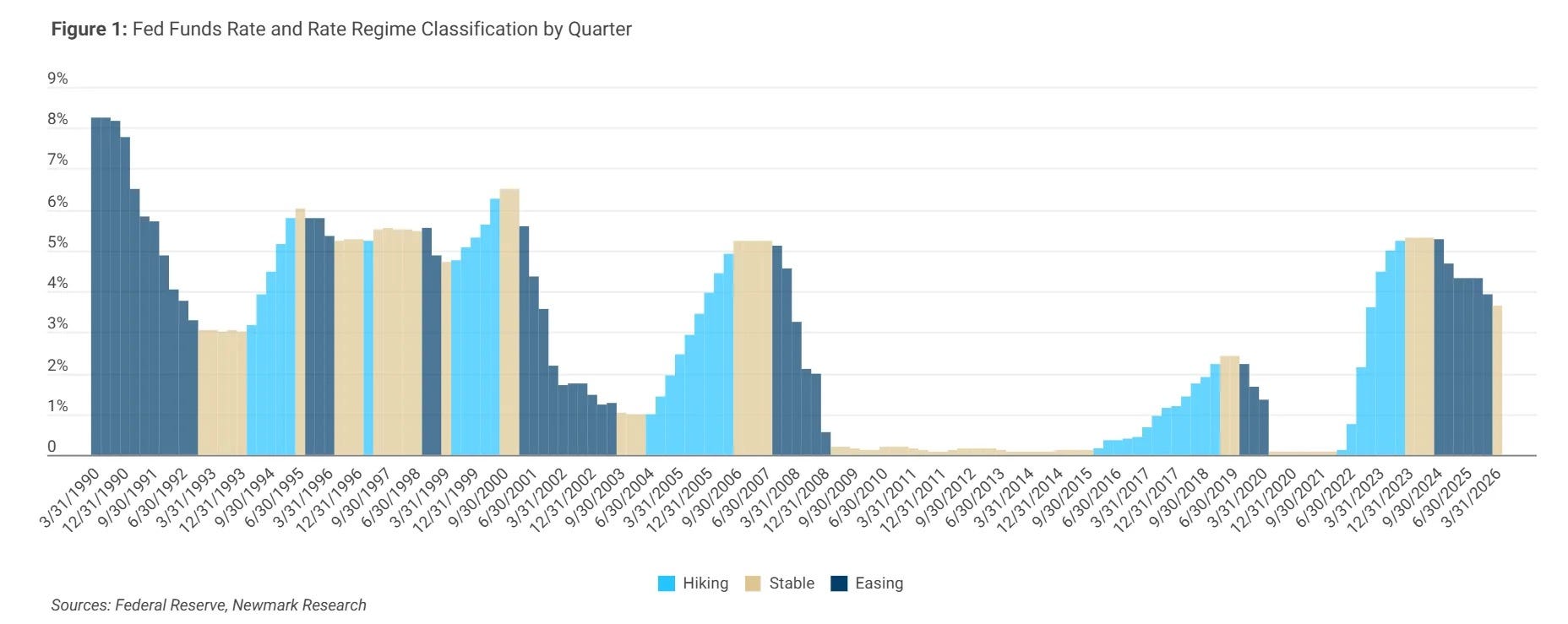
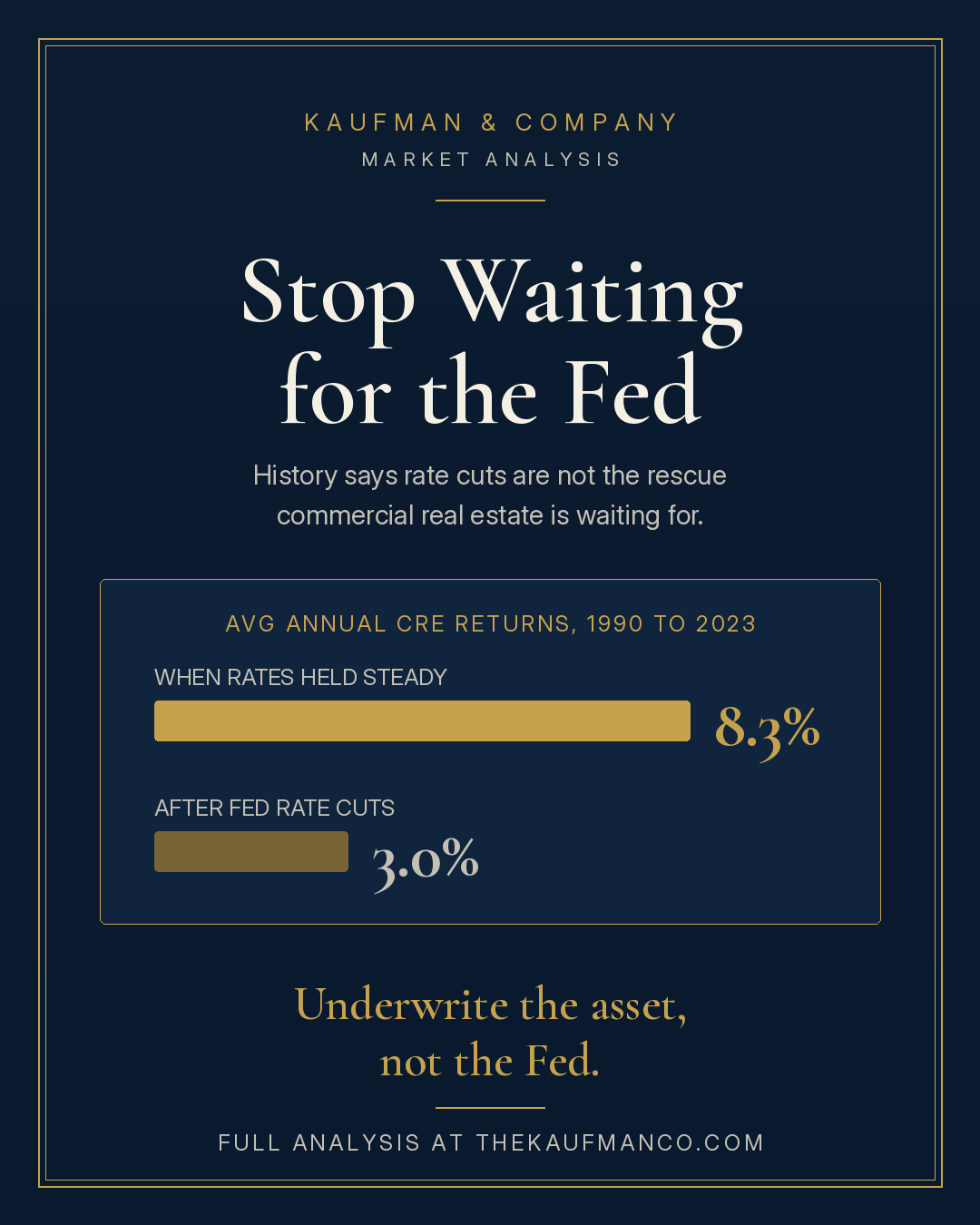
Newmark went back and studied commercial real estate performance from 1990 to 2023, and the findings should stop every sponsor in their tracks. The three years following a Fed rate cut generated average annual returns of just 3.0%. When rates held steady, returns averaged 8.3%. After hiking cycles, 6.9%.
Read that again. The best returns in modern CRE history came when the Fed did nothing. The worst came after the Fed cut. And the pattern held across office, multifamily, industrial, and retail.
This is not a paradox once you understand why the Fed cuts in the first place. Rate cuts are not a gift. They are a symptom. The Fed cuts because the economy is weakening, and a weakening economy means slower job growth, softer tenant demand, declining investor confidence, and reduced capital flows. Newmark’s Joe Biasi makes this point directly: those forces can outweigh the benefit of cheaper debt entirely. You get your lower coupon and lose your rent growth. That is a bad trade, and I have watched people make it in every cycle since the late 1990s.
Cheaper debt on weaker fundamentals is not a recovery. It is a slower way to lose.
The Fed itself has no idea what comes next
If you are still tempted to underwrite around a rate path, consider that the people setting the rates cannot agree on one.
The June FOMC minutes, the first under Chairman Kevin Warsh, show a committee that voted unanimously to hold at 3.50% to 3.75% and then split into openly opposing camps behind closed doors. Many participants see rates the same or lower by end of 2026. Many others believe the appropriate rate is above the current range by the end of this year. Markets are pricing it as a coin flip, roughly 50/50 on CME FedWatch.
Realtor.com senior economist Jake Krimmel put it well: a unanimous vote usually signals a unified outlook, and this one signals nothing of the sort. The committee is data dependent because it has no other choice.
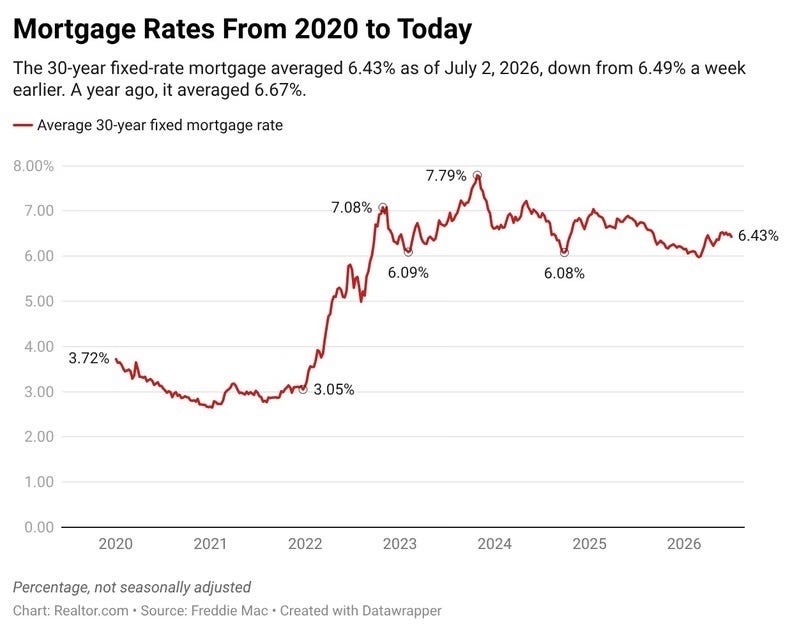
Layer on sticky inflation keeping long term Treasury yields elevated, mortgage rates bouncing off a seven week low of 6.43% as oil spikes on renewed hostilities with Iran, and a new Fed chair who wants to dial back forward guidance altogether. Governor Waller said it plainly this week: forward guidance is more art than science, and it has hindered policymaking as often as it has helped.
Translation for those of us who actually close deals: the Fed is telling you it will not telegraph its moves, and even if it did, the committee itself is divided on what those moves should be. Building your capital plan around a rate forecast right now is not analysis. It is hope with a spreadsheet attached.
One more uncomfortable truth from this environment. Moody’s Ermengarde Jabir notes that CRE’s traditional role as an inflation hedge has weakened. Slower rent growth colliding with rising wages, operating costs, and capex has compressed NOI growth across the board. The old assumption that real estate automatically absorbs inflation and passes it through is not holding. You have to earn your NOI growth now, asset by asset, lease by lease.
Meanwhile, 14.5 million homes sit empty
Here is where the macro story meets the ground, and where I think the real opportunity lives.
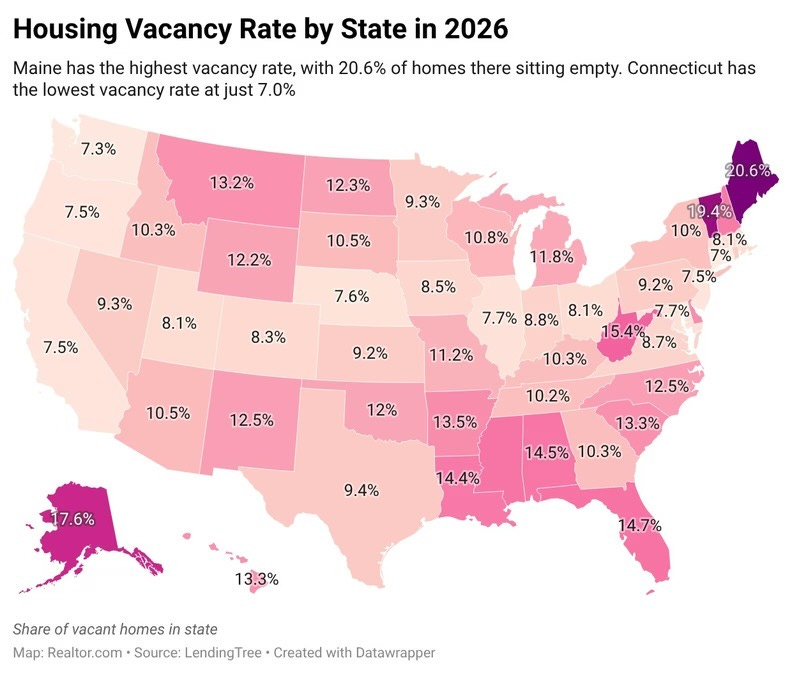
A new LendingTree analysis of Census data found that roughly 1 in 10 homes in America is vacant. That is 14.5 million houses. And here is the number that matters: fewer than 800,000 of them are actually for sale.
We do not have a housing shortage in the aggregate. We have a housing availability crisis, and the two are not the same thing.
Break down the vacancy data and the picture sharpens. About a third of vacant homes, 32.6%, are seasonal or recreational, someone’s second or third home. Another 18.2% are for rent. Only 5.5% are for sale. And the single largest category, at 35.9%, is “other,” a catch all covering estates in probate, legal proceedings, homes awaiting repairs, and properties simply stuck. Mississippi leads the nation in that category, where a broker like Teresa Love will tell you the story on the ground: inherited homes falling into foreclosure, developer product priced past what local incomes can carry, and foreclosed inventory that cannot trade because conventional financing will not touch homes needing improvements.
Every one of those stuck homes is a supply side failure that no rate cut fixes. Probate does not care about the federal funds rate. A house that cannot qualify for a conventional mortgage because of deferred maintenance does not become financeable at 5.5% instead of 6.5%.
The Vermont and Maine story, from someone who builds there
The seasonal home data hits close to home for me. I develop in Vermont and I know these mountain communities well. Vermont has the highest share of seasonal and recreational housing in the country, with 14.7% of the entire housing stock in that category. One in seven homes in the state sits empty for months at a time. Maine posts the highest overall vacancy rate in the nation at 20.6%, driven by second home concentration in places like York and Cumberland counties. Alaska rounds out the top three.
And here is the kicker: all three states carry median list prices well above the $430,000 national median. High vacancy, high prices. The textbook says vacancy softens values. The textbook is wrong when the vacancy is second homes owned by people who are not sellers at any reasonable price.
The workforce that runs these resort economies, the lift operators, the nurses, the teachers, the tradespeople, cannot find housing in the towns where they work while a seventh of the housing stock sits dark in the off season. That is not a rate problem. That is a structural supply and product problem, and it is exactly why I have committed so much of my platform to workforce housing and employer anchored development. The demand is not speculative. It shows up for a shift every morning.
The playbook: growth over rates
So what do you actually do with all of this? Newmark’s conclusion matches what I have practiced through four cycles: underwrite the asset, not the Fed.
That means prioritizing markets and properties with durable rent growth and real fundamentals, and it means being honest about which deals only pencil if rates fall. That discipline matters most in multifamily and industrial, where compressed cap rates have quietly made lower interest rates a load bearing assumption. If your return depends on a refinance at a rate the FOMC itself cannot agree will exist, you do not have a deal. You have a bet on a committee.
The operators who win the next three years will be the ones who can create NOI growth rather than wait for cap rate compression to be handed to them. Buy where jobs and households are actually growing. Build product that matches what local incomes can carry. Solve the availability problem, the stuck inventory, the missing workforce housing, the product gap in high demand markets, instead of waiting for cheap money to make mediocre deals work again.
The biggest catalyst for commercial real estate will not be a rate cut. It will be economic stability and disciplined execution against real demand. Investors waiting for the Fed to rescue asset values are going to be disappointed. Investors focused on rent growth, durable fundamentals, and the enormous structural gaps in American housing supply will do fine no matter what Chairman Warsh does next.
I know which side of that trade I am on. I have been on it for 25 years.
Daniel Kaufman is the Founder and CEO of Kaufman & Company, a private investment and holding firm with more than $2 billion in project value across real estate development, private credit, venture investment, and infrastructure.