
I read Fed statements the way I read a construction budget, looking for what changed, not what stayed the same. And today, what changed matters.
The Fed held rates steady at 3.5% to 3.75%, exactly as everyone expected. Nobody’s surprised by that part. What’s notable is what they removed from the statement: the language about “considering the extent and timing of additional adjustments” — Fed-speak for “we’re probably cutting again soon.” That phrase is gone. And the vote to remove it was unanimous, when back in April three policymakers had to push for it.
That’s not a small detail. That’s the committee telling us, in the fewest words possible, that the easing cycle is no longer the assumption.
The dot plot confirms it. The median Fed official now sees the policy rate ending the year at 3.75% — meaning a hike, not a cut, is the more likely path if the economy behaves as expected. Wall Street had priced in a smaller move, to roughly 3.625%. Instead, the Fed came in more hawkish than the market wanted, and stocks and bonds both felt it, the S&P and Nasdaq sold off, Treasury yields rose, though equities clawed back some ground once new Chairman Kevin Warsh took the podium.
I’ve spent 25-plus years underwriting deals through every kind of rate environment, and the lesson that never changes is this: it’s not the level of rates that hurts you, it’s getting caught leaning the wrong way when the direction shifts. A lot of pro formas across the industry have been built on the assumption that cheaper debt was coming in 2026. Today’s statement is the Fed telling us, plainly, not to assume that anymore.
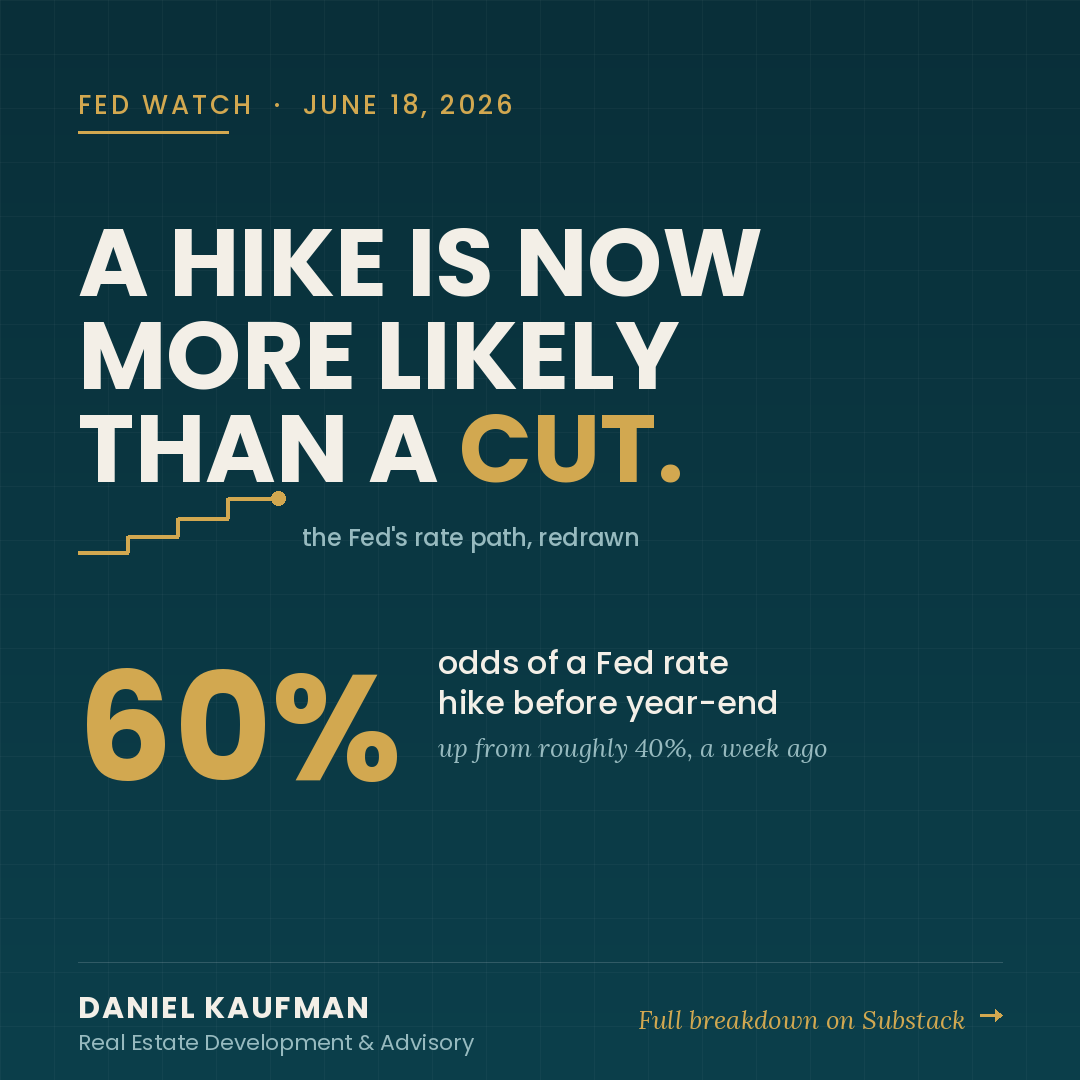
Why this hits real estate specifically. Construction loans, bridge financing, and refinancing all key off the path of short-term rates. A market pricing in cuts gives you room to underwrite tighter spreads and assume a friendlier refi environment down the line. A market now pricing close to 60% odds of a hike before year-end, up from roughly 40%, does the opposite. It pushes cap rates wider, it makes floating-rate construction debt more expensive to carry, and it punishes anyone who underwrote a deal assuming rate relief was the rescue plan.
This is exactly where I think discipline separates good developers from the ones who get hurt in a cycle like this. Strategic site selection, conservative debt assumptions, and stress-testing your numbers against a higher-for-longer rate environment aren’t just principles I talk about, they’re the reason a project survives a quarter like this one instead of needing a rescue capital raise.
A note on Warsh. He’s made clear he thinks the Fed over-communicates, and you can see that philosophy in the brevity of today’s release. In his press conference, he leaned into the role of reformer talking about task forces aimed at improving how the Fed actually conducts policy. Whether that translates into better outcomes remains to be seen, but markets are clearly recalibrating around a different kind of Fed leadership, and that recalibration is happening in real time. Prediction markets now favor a July hike over a cut, a full reversal from where things stood heading into today.
The takeaway for anyone underwriting real estate right now isn’t to panic. It’s to stop assuming the rate environment will bail out a marginal deal. Build your numbers for the world the Fed is actually describing, not the one we were hoping for.
— Daniel Kaufman