
Last week HUD set up its Innovative Housing Showcase on the National Mall, and for a few days the lawn in front of the Capitol looked more like a job site than a monument. Manufactured homes, 3D printed studios, compressed earth block prototypes, panelized duplexes, and a shippable emergency microunit built by a former SpaceX engineer, all lined up in the same place.
I’ve been saying for a long time that the problem in housing isn’t demand. It’s how we build. Seeing the federal government stage that argument on the Mall tells me the conversation has finally caught up to the job site.
The timing matters
The showcase landed right after Congress passed the 21st Century ROAD to Housing Act, the biggest housing reform package in about three decades. Builders will tell you plainly that this is a hard market. Materials are up, labor is thin, supply chains still break, local opposition kills projects, and disasters keep wiping out inventory we can’t replace fast enough.
One panelist described the cost problem as “death by a thousand cuts,” and that’s exactly right. There’s no single villain. It’s every permit, every fee, every trade you wait three weeks for, every foundation poured in the rain. It stacks up until a starter home isn’t a starter home anymore.
What was on the lawn
Uplift, an Austin startup backed by a $7 million seed round led by Andreessen Horowitz, showed its emergency microunit. Plug in power and water, self leveling feet, built in tie downs, and two or three fit on a single flatbed. They just sold their first unit. Their pitch is housing that arrives like an appliance: solar and battery as primary power, no sewer tie in, no foundation crew, no construction on site. Drop it and move in.
Azure Printed Homes, out of Gardena, California, prints small homes from recycled plastic. Their 180 square foot studio can be printed in hours and starts around $70,000, with interest from glamping operators and ADU buyers.
Civic Saint, a Kansas City contractor, is making compressed earth blocks from local clay, produced on site, with a claimed 70% cut in construction emissions. Their first test home debuts next spring.
Cavco showed a 1,250 square foot, two bedroom manufactured home that no longer sits on a permanent steel chassis, a change enabled by the new housing law. In one Pennsylvania community it retails for about $139,000 with monthly lot rent under $600. Compare that to a national median price above $400,000.
And the Structural Building Components Association assembled a two story duplex in hours from components built somewhere else.
HUD Secretary Scott Turner summed up the agency’s posture in one line: “The private sector is the real engine of innovation.” I’ll take that. Government’s best move in housing is usually getting out of the way of the people who actually build.
The real bottleneck isn’t the technology
The most honest comment of the week came from the SBCA’s Sean Shields, who pointed out that the building industry resists change because every innovation touches so many players. His example was the truss plate. It took decades for builders to adopt it, and they only did once someone stood on their job sites and showed them the time and labor it saved.
That’s the lesson I keep coming back to. A great prototype on the Mall is not a housing solution. A housing solution is a product that a contractor, a lender, a zoning board, an insurer, and a transport company all say yes to, at scale, in a real market. Anyone who has actually closed out a production order knows the hard part isn’t the box. It’s everything around the box.
What we’re doing about it
This is why we’ve put real time and capital into factory built housing instead of just writing about it.
At Mr. Good Container Homes, we’ve worked through the part nobody puts on a stage. Production verification, engineering, bonded insurance, DOT and motor carrier compliance, onsite storage, and a purchase order structure through LoneStar Kaufman. Our production runs through El Paso, and we’re evaluating container product for infill and floodplain adjacent lots in North Texas, where a conventional stick built house often doesn’t pencil. Tom Colangelo and Collin Hanks are also bringing their project and production management to our townhome work in Nashville. The goal isn’t a showpiece. It’s a repeatable unit that clears every approval and shows up on schedule.
At Oldivai, where I serve as President, the focus is workforce housing, specifically employer anchored housing in mountain resort towns and gateway communities. Those are the places where this problem is most acute. A ski town can have a billion dollar resort and nowhere for the lift operators, nurses, and teachers to live. Local labor is scarce, the building season is short, and every day a crew spends on site in winter costs money. Factory built and container product changes that math. You build in a controlled environment, ship, set, and have people living in homes while a traditional project is still waiting on its framers.
Put those two together and you get the model I believe in: a production partner that can deliver, paired with a development platform that knows where the housing is needed and who will live in it.
Where this goes
Uplift is right about one thing. Almost everything else we mass produce got better and cheaper over the last century. Cars did. Phones did. Rockets now land themselves. The home mostly didn’t. We still build it one at a time, in place, at the mercy of weather and whatever labor shows up that morning.
The showcase proves the ideas exist. The new law opens some of the regulatory doors. What’s left is execution: financing it, permitting it, insuring it, shipping it, and doing it again a thousand times. That’s the work we’re doing now, and it’s the work that will decide whether any of this reaches the people who need it.
About the Author
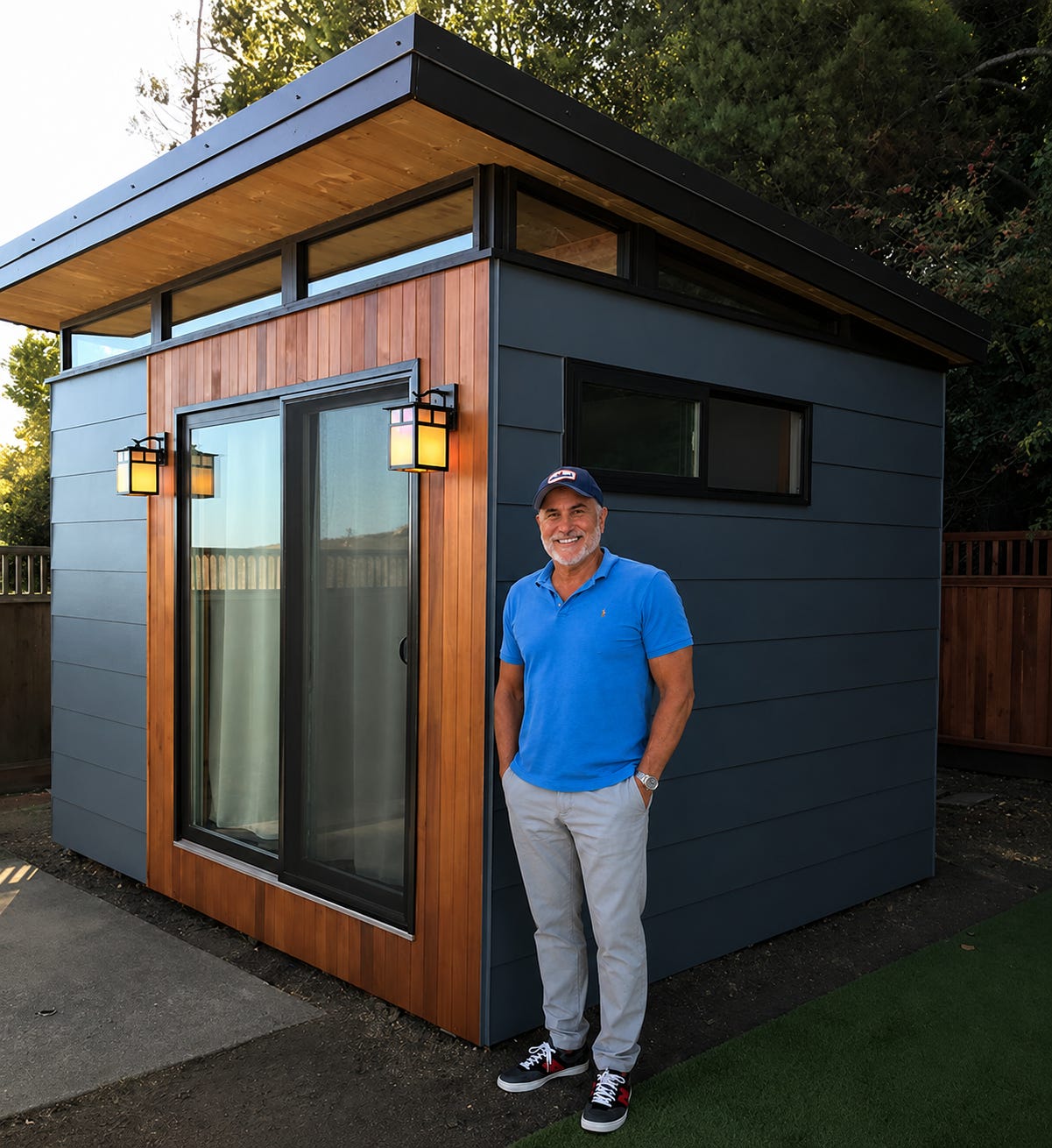
Daniel Kaufman is Founder and CEO of Kaufman & Company, a private investment and holding firm spanning real estate development, venture investment, and infrastructure, and President of Oldivai, focused on workforce and employer anchored housing in mountain resort communities.