
So what’s happening out there?
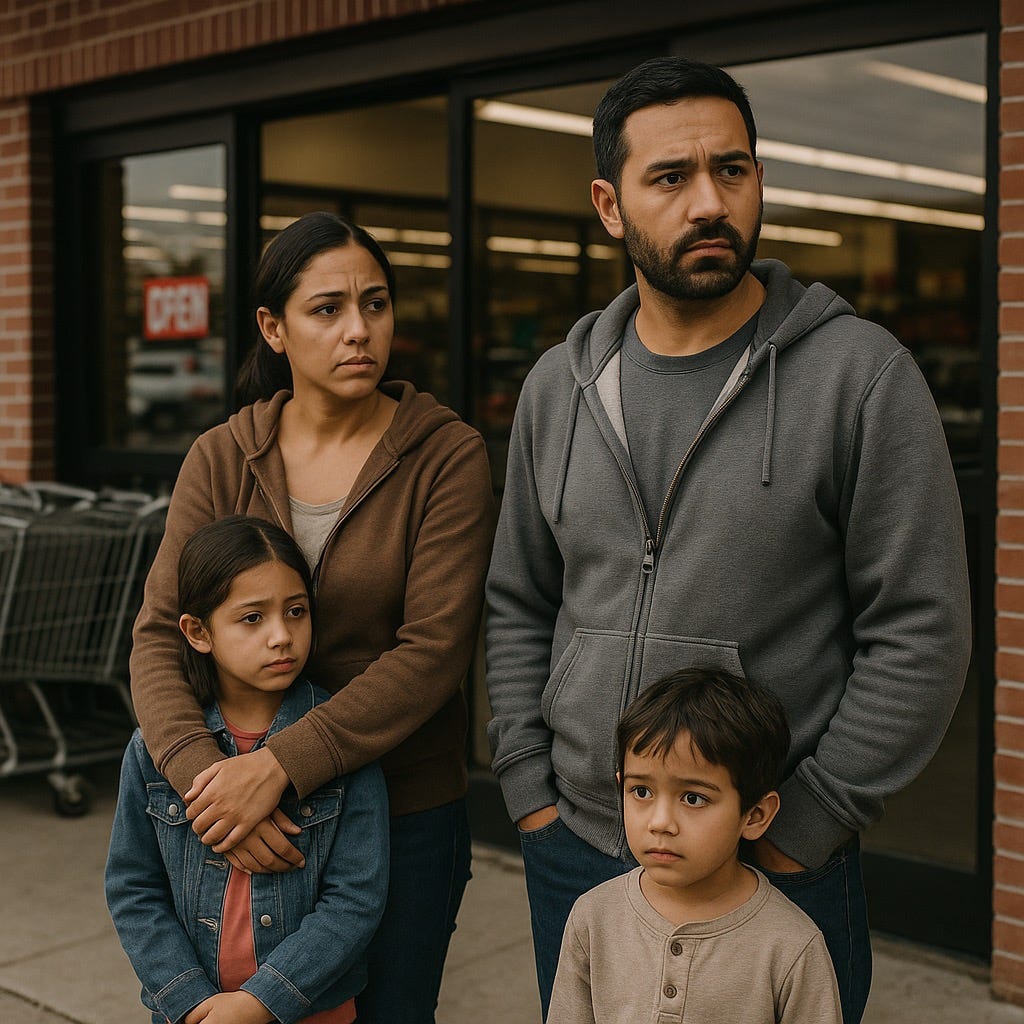
Right now, the federal government is shut down. Food stamps are being cut off for tens of millions of Americans, about one in eight families who rely on SNAP benefits each month. Two federal judges have ordered the government to tap emergency funds to cover the gap, but no one seems to know how much money is actually available or when it will reach people. Some have already been told they won’t receive anything this month.
At the same time, healthcare premiums are spiking for millions because federal subsidies under the Affordable Care Act were reduced — and the new rates just took effect.
I honestly thought reason would prevail before the weekend, that cooler heads would come to the table and find a way out. Why inflict so much pain, confusion, and uncertainty only to revisit it 48 or 72 hours later? But here we are.
Things are worse than I expected, and I expected them to be bad.
I still think the shutdown gets resolved early this week, but for millions of families, the damage is already done.
The Grim Thought I Can’t Shake
Over the past few days, I’ve had one thought I can’t get out of my head: the poor don’t matter in America.
I felt this same way in early 2022, when Congress allowed the enhanced child tax credit to expire, a program that had cut child poverty in half just a year earlier. The message to struggling families was clear: “We pulled you out of poverty… and now you’re heading back down.”
There were no protests. Barely a mention in the press. Just a quiet return to misery.
And now, it’s happening again.
What shocks me most is how little attention this crisis is getting. For the first time in modern history, millions of the most vulnerable Americans are losing access to food assistance — yet even in the media, it’s treated as a passing headline. Maybe that’s because most journalists don’t rely on SNAP benefits to feed their kids. But still — the silence is staggering.
The AI Fallout
Meanwhile, Amazon just announced 14,000 layoffs, mostly white-collar workers, citing efficiency gains from AI. Other companies will follow.
Every day, someone tells me, “Well, you called it — AI eating jobs — before anyone else was talking about it.”
But this was always the fear: that as AI accelerated, we’d start turning on each other. Desperation leads to destabilization.
Best-case scenario? A hyper-stratified society that looks like something out of The Hunger Games.
Worst-case? Widespread despair, violence, and economic collapse.
When Capital Turns on Labor
AI isn’t just transforming the economy — it’s reshaping how we think about capitalism itself.
Capital will always chase efficiency. And increasingly, that means replacing people with software, robots, and code. For decades, capitalism was our mentor — guiding growth, rewarding innovation, lifting millions into prosperity. But over time, it got older, more cynical, and paired up with its old friend technology. Together, they decided: “Let’s automate everything. If the market doesn’t like it, get rid of it.”
That logic now feels dangerous.
Even the most hard-nosed businessperson should recognize that the economic gains from technology have to be balanced, because a system where millions can’t afford to live or buy things isn’t sustainable. Capitalism doesn’t work when too many people are broke, angry, and left behind.
A Crisis of Meaning and Compassion
In cities like New York, “socialism” isn’t a dirty word anymore. It’s just the language of people who can’t afford a decent life and are fed up with the version of capitalism that chews through workers like disposable code.
Government could do more, much more, to alleviate poverty. But instead, we’re doing less. Dysfunction has become the norm. Everyone plays to their own team, ignores the suffering of others, and calls it politics.
These are sad days in America.
And maybe the saddest part is that so few seem to notice.